
By Dr Emily So & Dr Alice Shan, Dentists
A confident smile today is shaped not only by artistry, but by technology that allows you to visualise your future results before any treatment begins. Modern smile design blends digital imaging, aesthetic planning, and personalised clinical assessment to create a smile that suits your facial features, proportions, and goals. Instead of guessing how veneers, whitening, orthodontics, or contouring will appear, digital tools now let you see a realistic preview helping you make informed decisions with clarity and confidence.
This evolving approach to cosmetic dentistry is purposeful, structured, and patient centred. It connects 3D scanning, digital simulation, and functional analysis to create a clearer, collaborative process. Every stage-assessment, preview, refinement, and treatment-is shaped around your unique dental and facial characteristics.
What Makes Modern Smile Design Different from Traditional Cosmetic Dentistry?
Traditional cosmetic planning often relied on experience and static models. Modern smile design incorporates:
- 3D digital scanning for accurate digital impressions
- Facial and dental photography to guide proportion and symmetry
- AI-supported smile simulation software for previewing outcomes
- CAD/CAM technology for precision planning
- Digital mock-ups to trial the smile before treatment
This approach keeps the design tied to your facial features, lip position and bite, rather than to the teeth alone. It merges aesthetic design with functional dentistry to support both appearance and long-term comfort.
How Does the Digital Smile Design Process Begin?
Every smile design journey begins with a detailed examination that considers far more than tooth colour or alignment. A smile is influenced by the relationship between your teeth, gums, lips, and face so each component is evaluated during your consultation.
During the initial stage, your dentist may assess:
- Facial symmetry and soft tissue balance
- Tooth shape, width, and proportions
- Gum contours and visibility
- Alignment and bite relationships
- Shade, translucency, and texture
- Lip movement at rest and during smiling
This analysis keeps the plan facially driven, meaning your own features determine the direction of the design.
What Digital Tools Are Used to Create Your Smile Preview?
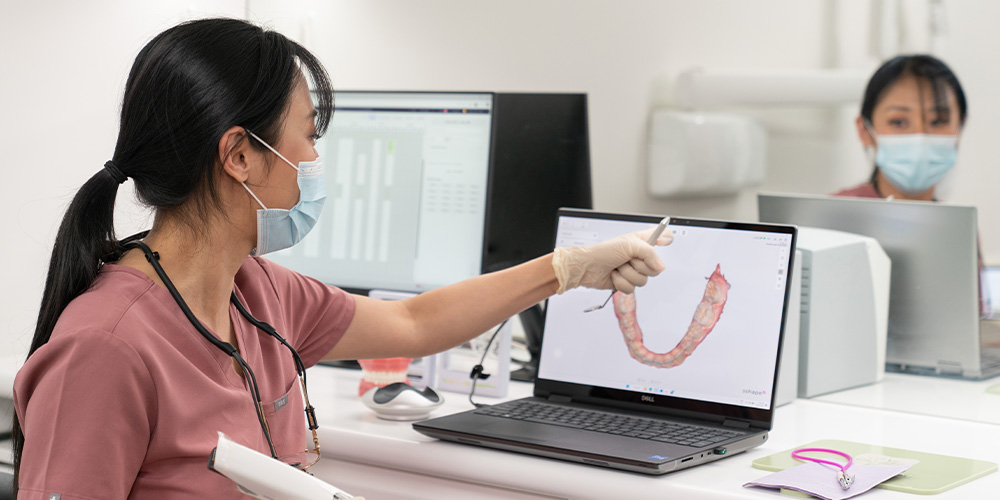
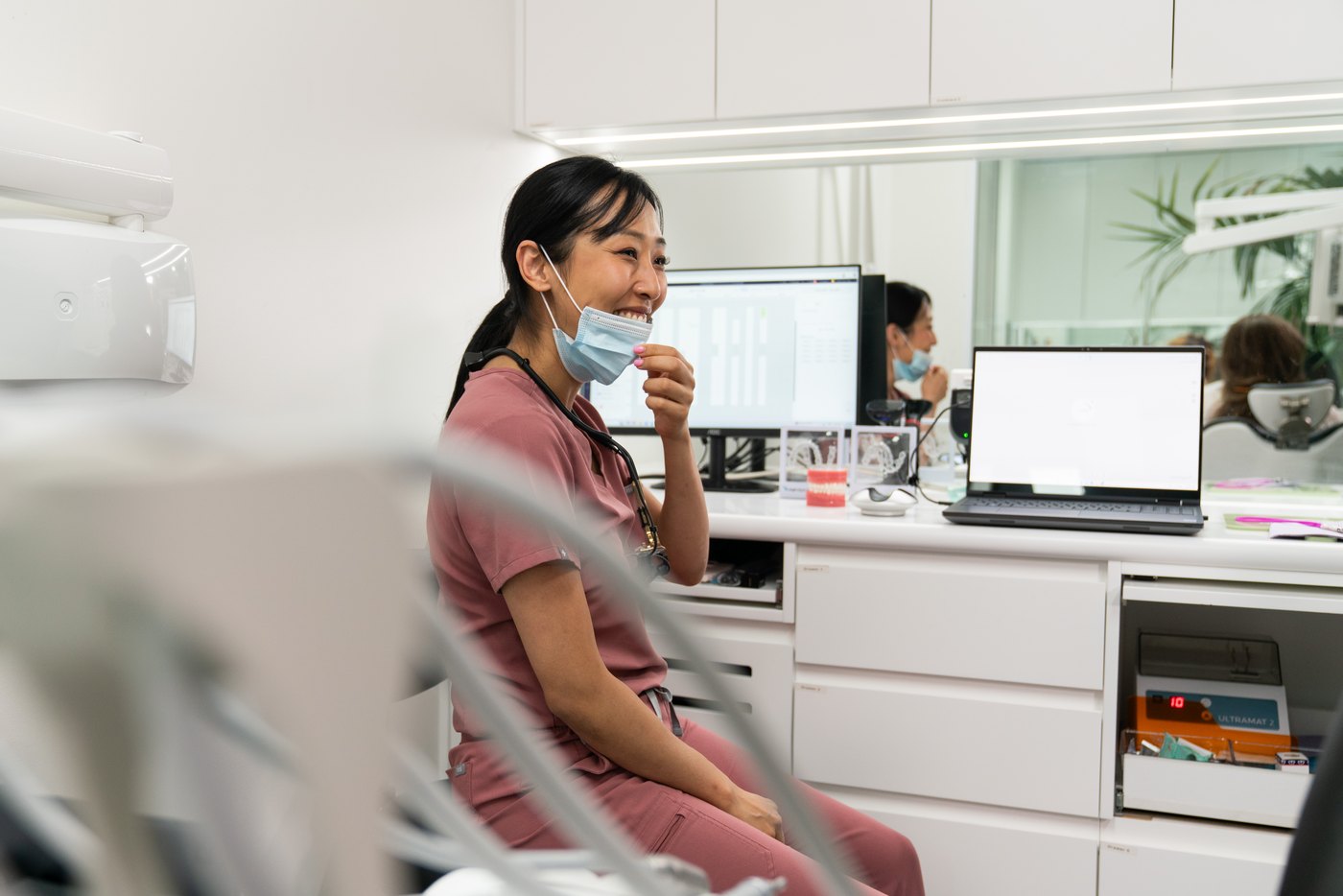
Modern smile design relies on digital tools that make the planning clearer. These technologies create an accurate baseline and guide the simulation of your proposed changes.
Table 1: Digital Tools Used in Smile Design
| Digital Tool | Purpose | Patient Benefit |
| 3D Intraoral Scanner | Captures detailed digital impressions | No messy moulds, fast and comfortable |
| Digital Photography | Assesses facial balance and proportions | Helps the design suit natural features |
| Smile Simulation Software | Previews proposed aesthetic changes | Allows informed decision-making |
| CAD/CAM Systems | Designs restorations with precision | Improves accuracy and fit |
| Digital Mock-Up | Creates a temporary trial of the design | Visualises changes before treatment |
These tools reduce uncertainty and let the decisions be made together by patient and clinician.
How Does a Digital Smile Preview Help You Make Confident Choices?
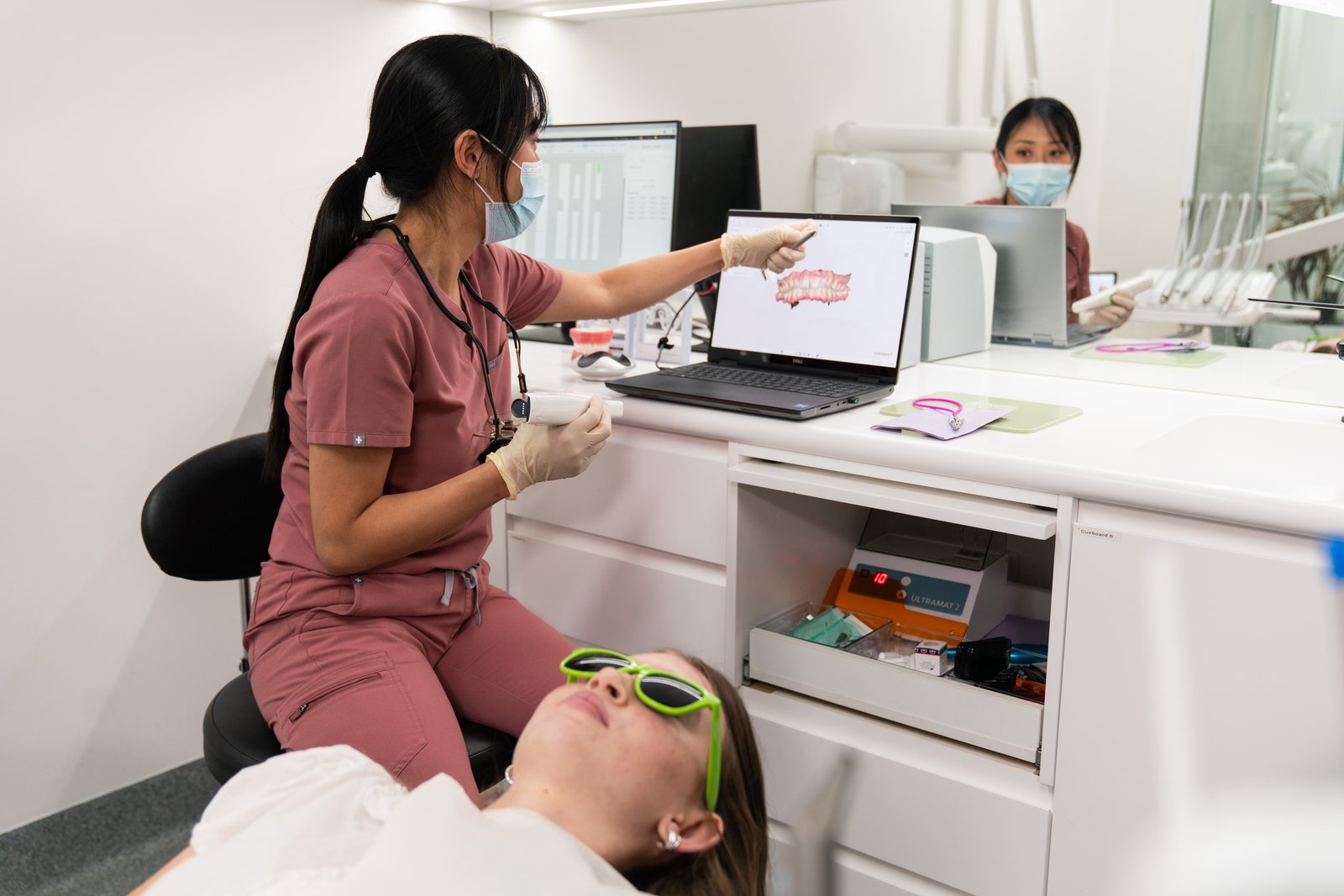
One of the most useful parts of modern smile design is being able to see a proposed result before any treatment begins. This simulation shows how veneers, whitening, alignment, or other enhancements will work together to create a cohesive aesthetic result.
A digital preview helps you:
- Understand different cosmetic options
- See how proposed changes influence symmetry
- Explore multiple design versions
- Visualise tooth shape, colour, and proportions
- Communicate preferences clearly
- Make decisions with a clearer idea of the likely result
For many patients, seeing the proposed smile makes the decision clearer and takes some of the guesswork out of cosmetic planning.
What Elements Are Evaluated to Design a Harmonious Smile?
A well-designed smile relies on multiple structural and aesthetic elements. These elements combine to create balance with your overall facial features:
- Tooth shape and proportion
- Arch form and alignment
- Gumline symmetry
- Smile arc and lip posture
- Tooth shade and brightness
- Functional bite relationships
- Facial structure and symmetry
To achieve a result that feels natural, these characteristics must complement one another. The aim is not only aesthetic improvement, but harmony and long-term comfort.
Table 2: Smile Components Assessed in Smile Design
| Component | What Is Evaluated | Why It Matters |
| Teeth | Shape, size, proportion, alignment | Influences aesthetic balance |
| Gums | Contour, symmetry, visibility | Frames the smile |
| Lips | Smile arc and movement | Guides natural placement of teeth |
| Face | Symmetry and proportions | Supports overall balance |
| Bite | Function and occlusion | Supports comfort and longevity |
What Treatments Might Be Included in a Modern Smile Design Plan?
Smile design is not a single treatment, it is a customised roadmap shaped around your goals and oral health. Plans often combine several procedures to meet your goals.
Depending on your needs, your dentist may recommend:
- Teeth whitening for improved brightness
- Composite bonding for refinement of shape
- Porcelain veneers to enhance symmetry and aesthetics
- Orthodontic treatment (braces or clear aligners) for improved alignment and function
- Gum contouring for balanced proportions
- Crowns for functional and aesthetic restoration
Your final plan is tailored to your facial features, lifestyle, and desired outcome.
Why Is Oaks Dental the Right Place to Begin Your Smile Design Journey?
At Oaks Dental, modern smile design is approached with close attention to detail, digital planning that lets you see a proposed result before treatment begins, and a commitment to personalised care. Every consultation is grounded in facially driven assessment and guided by digital tools that improve clarity, predictability, and comfort. The team works collaboratively with you throughout the process, ensuring your preferences, goals, and functional needs are fully understood. Whether you’re exploring subtle refinements or a comprehensive transformation, Oaks Dental provides a patient centred process that combines careful planning with clinical judgement, so the result suits your face, your bite and your own goals.
Most people who come to us about their smile are working towards a date, a wedding, a milestone birthday, a round of photos for work, and in Neutral Bay that date shapes the plan as much as the teeth do. We do all of this holistically driven, working within a health framework that’s driven by promoting airway and sleep heath.
Research References
Oral Health Foundation Australia – Cosmetic Dentistry Considerations
Australian Institute of Health and Welfare – Oral Health Overview
FAQs
1. How long does the digital smile design process take?
Timeframes depend on the number of assessments required, but most preview stages can be completed within one to two appointments.
2. Is the digital preview an exact representation of my final smile?
Digital previews offer a close visual approximation, helping guide planning and expectations, although final clinical adjustments may be needed.
3. Do I need to undergo all recommended treatments in a smile design plan?
Your plan is personalised. You may choose to complete some or all aspects depending on your goals and clinical recommendations.
4. Is smile design only for cosmetic purposes?
No. Smile design also considers bite function, comfort, longevity, and how your teeth interact during everyday activities.
5. Are digital scans safe and comfortable?
Yes. Digital scanning technology is non invasive and designed to capture accurate impressions without traditional materials.
6. Can smile design incorporate existing dental work?
In many cases, yes. Existing restorations may be integrated into the plan if they are functionally sound and aesthetically suitable.