NEUTRAL BAY | GENERAL & PREVENTATIVE DENTISTRY
Periodontal Treatment (Gum Disease)
Protecting the foundation of your smile with gentle, supportive care.
Healthy gums are the foundation of healthy teeth. At Oaks Dental, we take gum health seriously because periodontal disease can progress quietly and early intervention makes a significant difference. Our approach is warm, thorough, and tailored to your individual needs, helping you understand what’s happening and how to manage it with confidence.
What is periodontal disease (gum disease)?
Periodontal disease, or periodontitis, is an inflammatory condition affecting the gums and the bone that supports your teeth. It develops when plaque and hardened calculus accumulate under the gumline, triggering an immune response. Over time, this can lead to:
- Gum inflammation and recession
- Bone loss
- Mobility of teeth
- Tooth loss in advanced stages
While gum disease is common, it is also manageable especially when detected early.
Signs you may have gum disease
Many people don’t realise they have periodontal disease because it can progress slowly and without pain. You may notice:
- Bleeding when brushing or flossing
- Red, swollen, or tender gums
- Persistent bad breath
- Receding gums or teeth that appear longer
- Loose or shifting teeth
- A metallic taste or pus around the gums
During your visit, your dentist will measure your gum pockets and may recommend X-rays to assess the bone supporting your teeth.
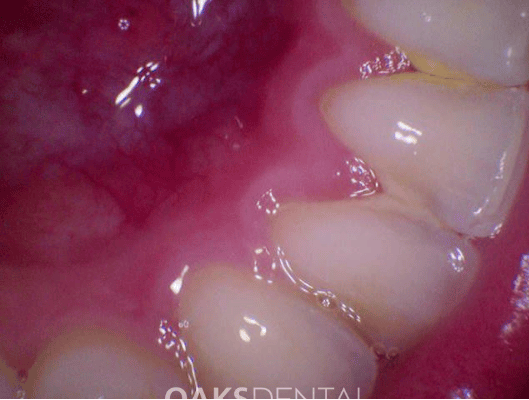
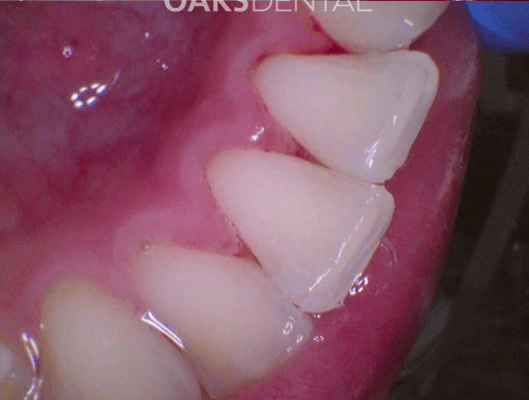
Before & After: Professional cleaning to remove heavy calculus and treat gingivitis restoring healthier gums and brighter teeth.
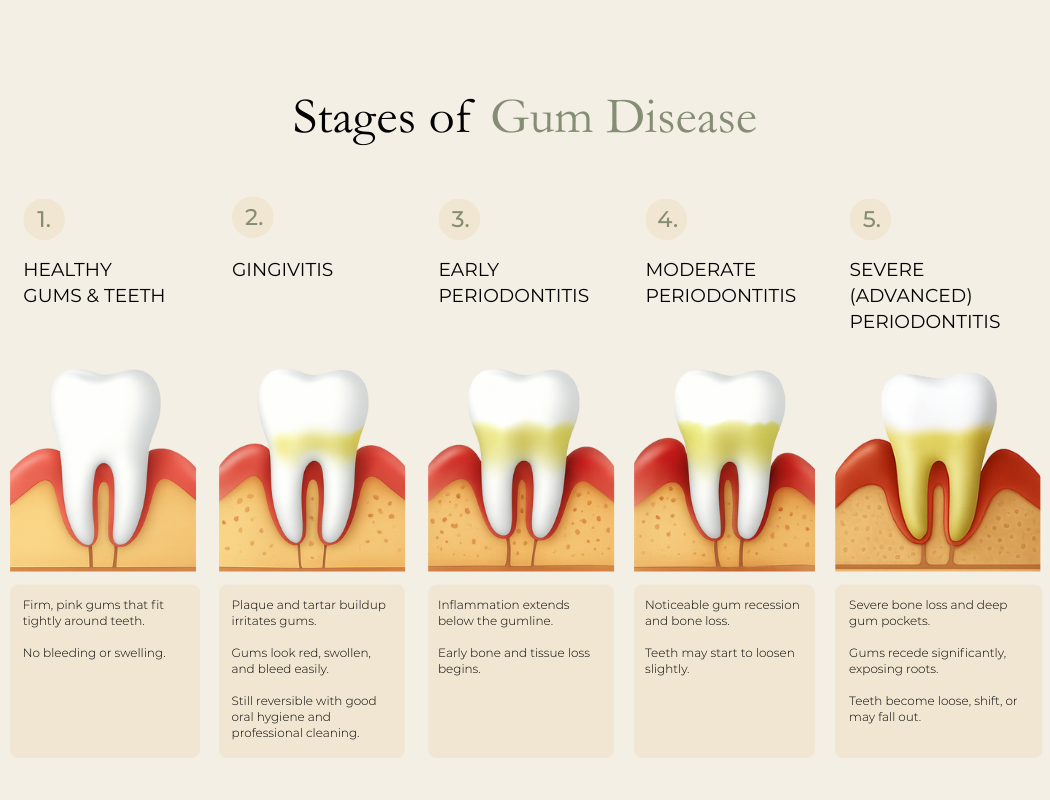
Stages of Gum Disease

HEALTHY GUMS & TEETH
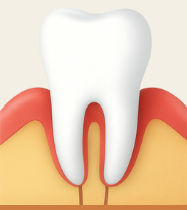
Firm, pink gums that fit tightly around teeth.
No bleeding or swelling.

GINGIVITIS
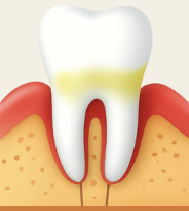
Plaque and tartar buildup irritates gums.
Gums look red, swollen, and bleed easily.
Still reversible with good oral hygiene and professional cleaning.

EARLY PERIODONTITIS
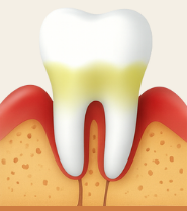
Inflammation extends below the gumline.
Early bone and tissue loss begins.

MODERATE PERIODONTITIS
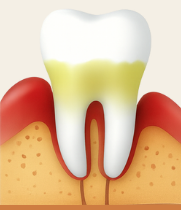
Noticeable gum recession and bone loss.
Teeth may start to loosen slightly.

SEVERE (ADVANCED) PERIODONTITIS
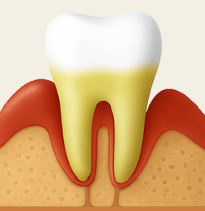
Severe bone loss and deep gum pockets.
Gums recede significantly, exposing roots.
Teeth become loose, shift, or may fall out.
Gum Disease Explained: What Causes It and Why Treatment Matters
Why does gum disease happen?
Periodontal disease is caused by the body’s reaction to bacteria in plaque and calculus. When these deposits stay under the gums, your immune system responds sometimes more aggressively than needed leading to tissue and bone breakdown.
Certain factors can increase your risk, including:
- Smoking or vaping
- Diabetes
- Stress
- Genetics
- Hormonal changes (pregnancy, puberty, menopause)
- Medications that reduce saliva
- Compromised immune response
Understanding these risk factors helps us tailor a plan that supports your overall health as well as your gums.
Periodontal Treatment at Oaks Dental
Our focus is to stabilise your gum health, reduce inflammation, and help prevent further bone loss through consistent, structured care.
Deep Cleaning (Scaling and Root Surface Debridement)
This thorough cleaning targets plaque and hardened calculus beneath the gumline. It is completed over one or more visits depending on your needs. By reducing the bacteria under the gums, we help the tissues heal and reduce pocket depth over time.
Personalised Home Care Guidance
Effective gum health starts at home. Your dentist will show you techniques and tools that work for your specific gum shape, comfort level, and dexterity.
Ongoing Maintenance Visits
Periodontal disease requires regular monitoring. Your dentist will recommend maintenance visits every 3–4 months—or another schedule that suits your needs—to keep the condition stable.
Lifestyle Support
You may also be guided on steps such as:
- Avoiding smoking or vaping
- Managing diabetes
- Reducing stress
- Understanding hormonal factors
- Making oral-friendly dietary choices
These elements play a significant role in controlling gum inflammation.
What happens if gum disease isn’t treated?
Untreated gum disease gradually leads to irreversible bone loss. As the bone shrinks, teeth may loosen, drift, or become uncomfortable to chew on. In advanced stages, teeth may be lost.
Managing periodontal disease helps:
- Slow or halt its progression
- Protect your natural teeth for longer
- Support your general health
Not sure if it’s gum disease?
You’re not alone.
Many people only seek help once symptoms become noticeable. If your gums bleed, feel puffy, or look like they’re receding, it’s worth coming in for an assessment. Early care can help prevent more advanced issues later on.
Frequently Asked Questions
Can gum disease be cured?
Periodontal disease cannot be reversed once bone loss has occurred, but it can be effectively managed. Regular professional care, combined with good home habits, helps prevent further progression.
Does deep cleaning hurt?
Deep cleaning is often completed with local anaesthetic to ensure comfort. Some tenderness afterward is normal, and your dentist will explain what to expect.
Is gum disease linked to other health conditions?
Research suggests a connection between gum health and general health factors such as diabetes and cardiovascular disease. Managing gum inflammation supports overall wellbeing.
Why do my gums bleed even when I brush gently?
Bleeding is often a sign of inflammation caused by plaque buildup. Once professional cleaning and home care habits improve, bleeding typically reduces.
How often do I need maintenance visits after treatment?
Most periodontal patients benefit from visits every 3–4 months. Your dentist will recommend a personalised schedule based on your gum condition and response to treatment.
Can gum disease affect my breath?
Yes. Bacteria associated with gum inflammation can contribute to persistent bad breath. Treating and managing gum disease often improves this.

Disclaimer
Periodontal (gum) disease is a chronic condition that varies in severity and progression between individuals. While treatment can help manage the condition, reduce inflammation, and slow or stabilise its progression, it may not fully reverse existing damage to gum tissue or bone.
Long-term management, including ongoing professional care and effective home oral hygiene, is essential to maintain results. Treatment recommendations will depend on your individual condition, risk factors, and response to care.
Ready to support your gum health?
If you’re concerned about bleeding gums, sensitivity, or changes in your smile, our team at Oaks Dental is here to help.
Contact us to arrange a gentle, informative gum health assessment.