
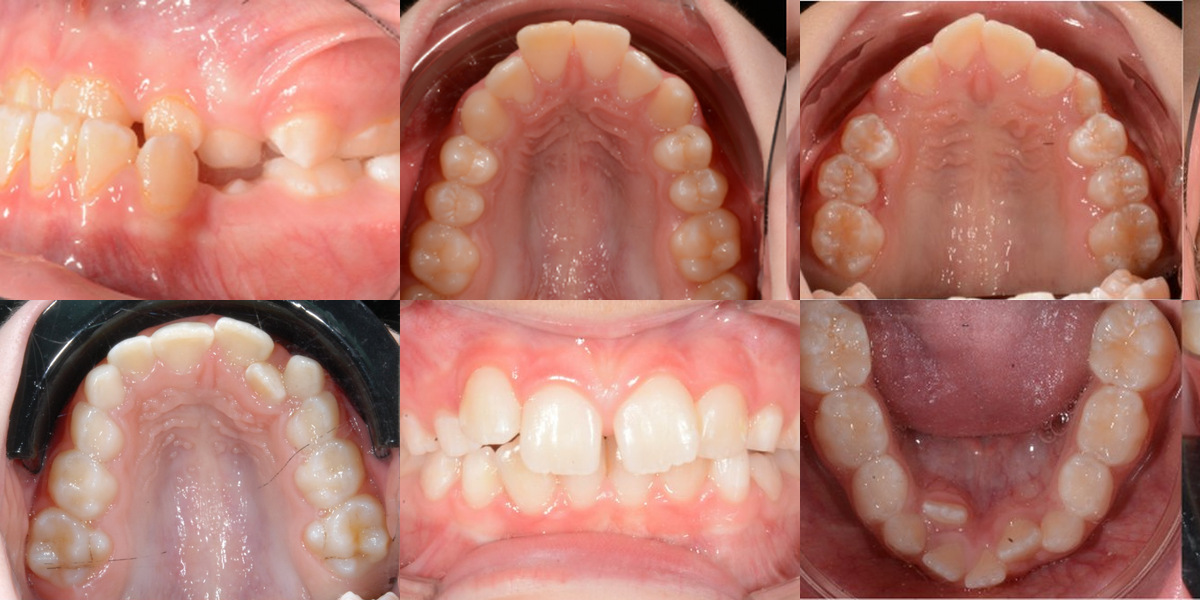
By Dr Alice Shan & Dr Emily So, Dentists
Somewhere between the first wobbly tooth and the last baby molar, most parents start wondering about the crooked ones. The adult front teeth arrive looking far too big for the face, they come in at angles, and the obvious question follows: do we do something now, or wait?
The honest answer is that it depends on what’s causing the crookedness, and that most children don’t need anything done at seven, but almost all of them benefit from someone looking.
Why age seven comes up so often
Around seven, a child usually has a mix of baby and adult teeth. The first adult molars are in, the front teeth are arriving, and for the first time it’s possible to see how the bite is going to work: how the jaws relate to each other, whether there’s room coming for the teeth still to arrive, and whether anything is being pushed off course. An assessment around this age is a widely used benchmark for that reason. It is a look, not a commitment.
Crowding is usually a space problem, not a tooth problem
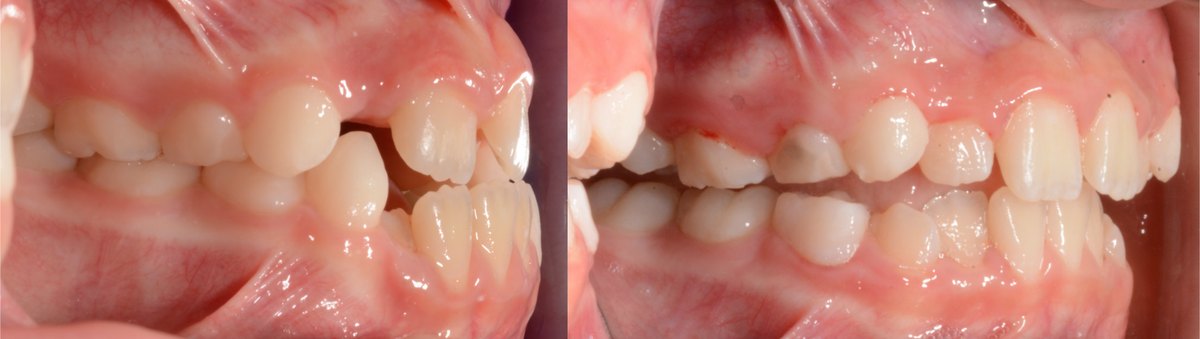
It’s worth stopping on this, because it reframes the whole question. Teeth come in crooked when there isn’t enough room for them to come in straight. The teeth themselves are rarely the thing that has gone wrong: the arch they are arriving into is simply narrower or shorter than the set of teeth needs.
One of the earliest clues is easy to see at home, and it’s the opposite of what most parents assume. Gaps between the baby teeth are a good sign: baby teeth are much smaller than the adult teeth that replace them, so a child who has visible spaces at four or five has room banked for what’s coming. Baby teeth packed tightly together with no gaps at all is the pattern worth mentioning to us.
What early treatment is actually for
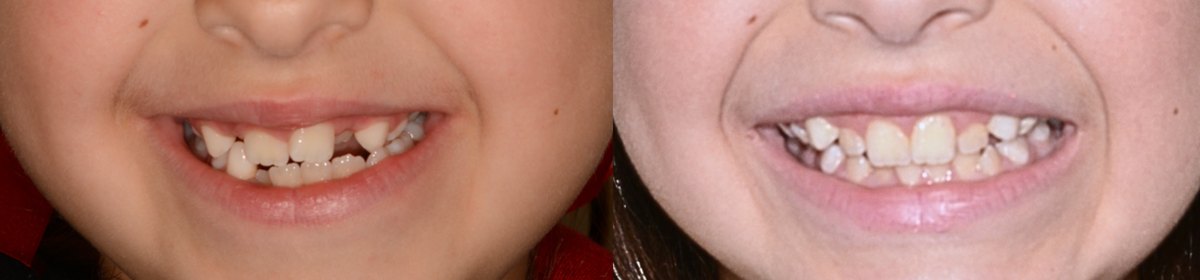
This is the most useful thing to understand, because “early orthodontics” sounds like braces for small children and it isn’t.
Braces and aligners are very good at moving teeth into better positions within the space that exists. What conventional fixed braces alone don’t do, once a child has stopped growing, is change how wide the upper jaw is. (Expansion appliances used alongside braces are a different matter: that’s exactly what they’re for.) Straightening teeth is generally best done once the adult teeth are through. Early treatment has a different job: guiding growth and creating room, while the jaws are still developing and can still be influenced. Straightening comes later, if it’s needed, and is often simpler for having had the groundwork done.
The things worth looking at early
- Crossbite. Upper teeth biting inside the lower ones, on one side or across the front. Left alone, a child often shifts the jaw sideways to make the bite work, and that pattern can become established.
- A narrow upper jaw. Sometimes visible as a high, narrow palate, and often connected to the airway and nose-breathing picture.
- Significant crowding. Where there is clearly not enough room for the teeth still to come.
- Front teeth that stick well forward. Beyond appearance, prominent upper front teeth are more exposed in a fall or a knock in the playground.
- Habits. Thumb sucking or a dummy past the early years, or a tongue that rests and pushes forward, both of which shape the growing arch.
- Teeth that are missing, extra, or slow to arrive. Easier to plan around when found early.
- Asymmetry. A jaw that shifts to one side to close.
What we’d actually do, and why “wait and see” isn’t our answer
A lot of children are told to come back in a year. We don’t work that way, and it’s worth explaining why.
If a jaw isn’t developing the width or the forward growth it should, something is causing that. Watching it happen for two years and then treating the result is a lost opportunity: the causes are usually more changeable at seven than the consequences are at twelve. So when active appliance treatment isn’t indicated yet, the plan isn’t to observe. It’s to work on what’s driving it.
We think about it in three stages:
- Phase 0: addressing the causes. Airway and nasal breathing, sleep, and the muscles and resting posture of the mouth. Details below.
- Phase 1: early interceptive orthodontics. Active appliance treatment while the jaws are still growing: expansion, space maintenance, growth guidance, redirecting a tooth that is heading the wrong way.
- Phase 2: alignment. Braces or aligners once the adult teeth are through, if they are still needed. Often less is needed for having done the earlier work.
What Phase 0 actually involves
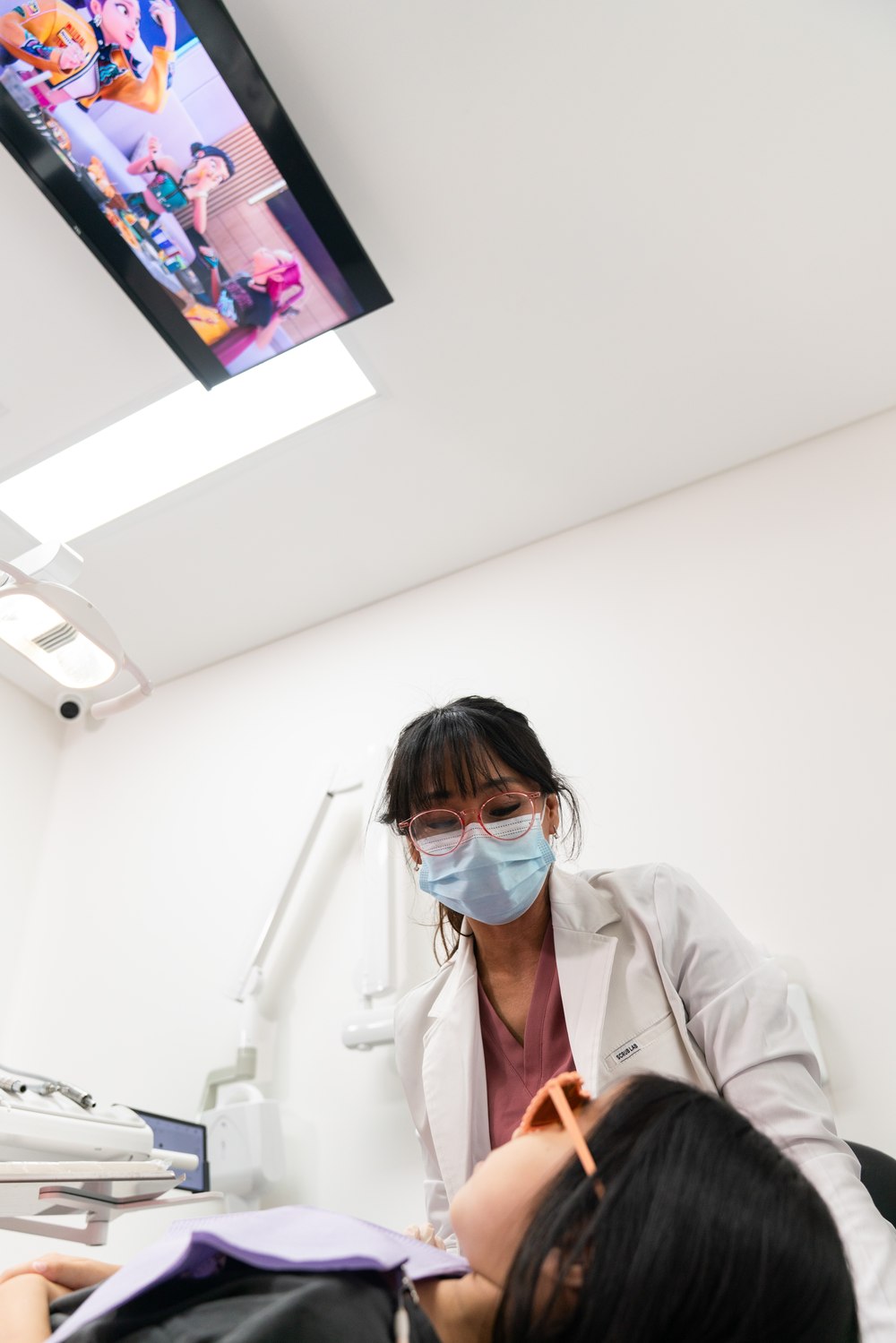
None of this requires an appliance, and most of it is about function rather than teeth:
- Breathing. Whether your child can comfortably breathe through their nose, and what is stopping them if they can’t: persistent congestion and allergy managed with your GP, enlarged tonsils or adenoids assessed by an ENT. A child who cannot use their nose tends to hold the tongue low and away from the palate, and that pattern is associated with differences in how the upper jaw develops its width. The strength of that link is still debated, which is why we assess rather than assume.
- Sleep. How they sleep and how well: snoring, restlessness, waking unrefreshed. Screened at every check-up, and referred on where it warrants it.
- Oral muscle tone and function. Where the tongue rests, whether the lips seal comfortably at rest, how they swallow and chew. Myofunctional exercises, and referral to a speech pathologist or myofunctional therapist where that’s the right support. Diet texture matters here too: jaws respond to being used.
- Habits. Thumb, dummy, or a tongue that habitually pushes forward.
Then we reassess against photographs and measurements, so we can see whether things are actually moving in the right direction rather than relying on impressions a year apart.
Sometimes everything is genuinely fine and there is nothing to do in any phase, and we’ll say that plainly rather than invent work. But “nothing to treat yet” and “nothing to do” are not the same sentence, and most practices use them interchangeably.
What Phase 1 looks like when it’s needed
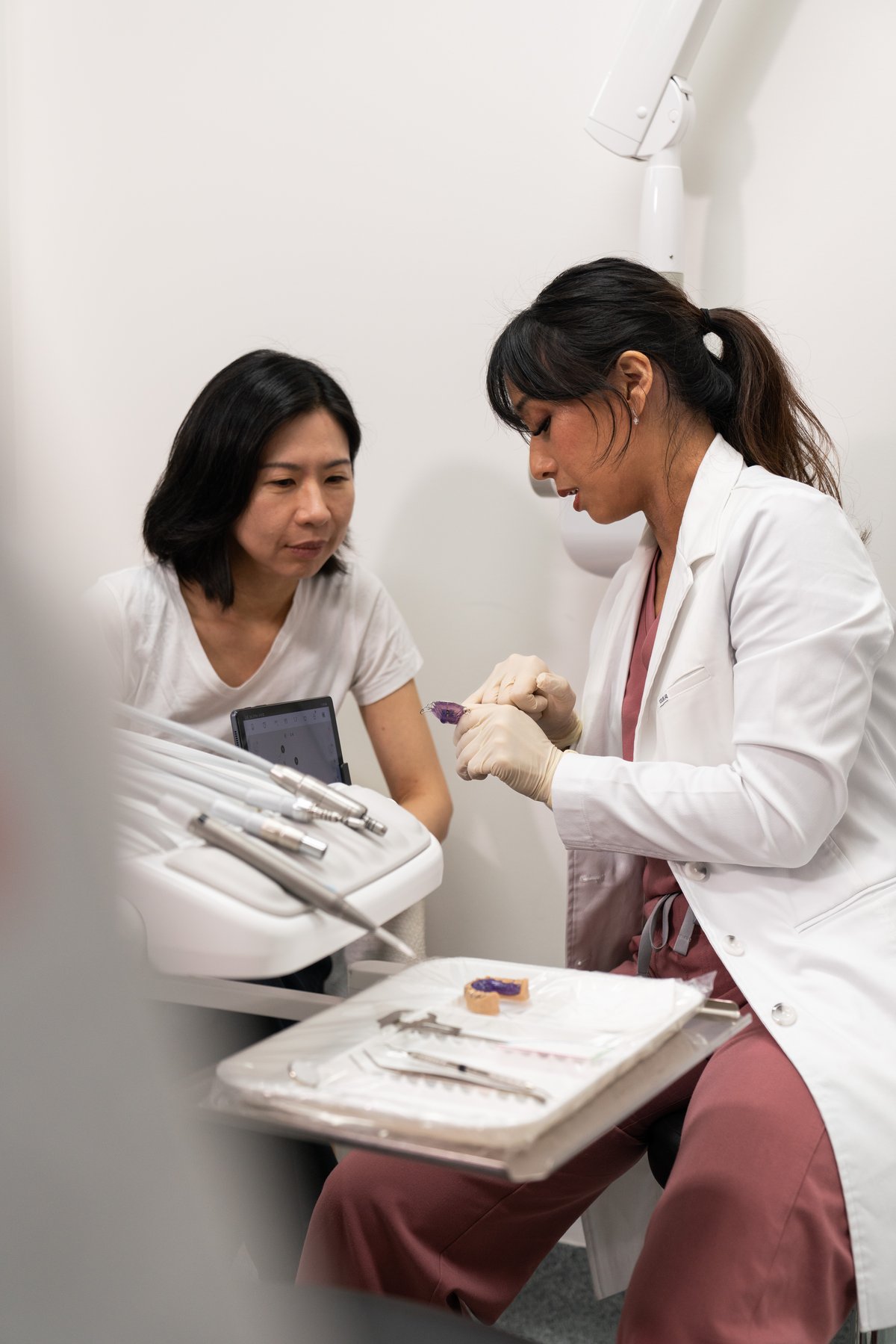
The options are usually modest: an appliance to widen a narrow upper arch, holding space where a baby tooth has been lost early, guiding jaw growth at the right point in the growth spurt, or removing a baby tooth at the right moment so an adult tooth can find its way in. These are short interventions with a specific purpose, not years in braces.
Being straight with you about what it doesn’t do
Early treatment doesn’t always remove the need for braces or aligners later. Often it reduces how much is needed, or makes the later phase more straightforward. Sometimes a child would have ended up in the same place either way. Any dentist who tells you early treatment will definitely prevent braces is overselling it, and outcomes differ from child to child.
Cost and time are real considerations too, and doing something now that could reasonably wait isn’t in your child’s interest. If we don’t think there’s a reason to treat, we’ll say so.
Where we sit, and when we refer
We are general dentists with a particular clinical interest in children’s airway health and growth guidance, and that is the work we do here. Where a child needs specialist orthodontic care, we refer to a registered specialist orthodontist and stay involved alongside them. Knowing which is which is part of the assessment.
What the appointment looks like
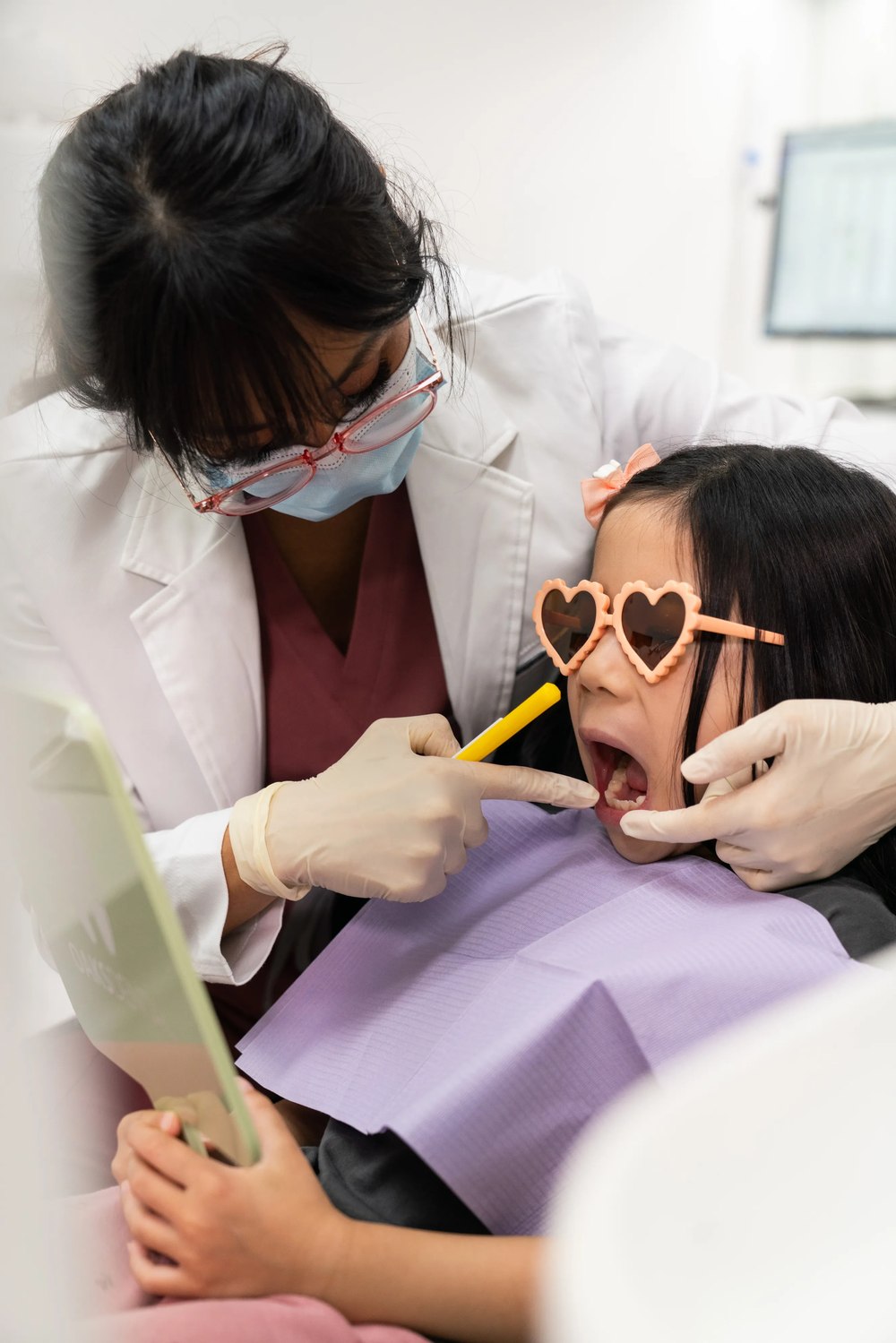
We talk with you first: what you’ve noticed, whether there’s a family history of crowding or jaw differences, how they sleep and breathe. Then an examination of the teeth, bite, jaws and lip and tongue posture, and photographs. X-rays only if they will change what we recommend. Then a conversation about what we found and the options, including waiting, with anything we recommend set out in writing before you decide.
You may not need to book anything extra. We screen every child for airway, sleep and jaw growth at their routine check-up, so if your child already comes to us, this is being looked at. If something needs a longer conversation, we’ll tell you and we can arrange it. Plenty of families around Neutral Bay start here rather than with a separate appointment. Book online or call us on (02) 9096 3895.
References
Orthodontics Australia. When to see an orthodontist. orthodonticsaustralia.org.au
Batista KBSL, Thiruvenkatachari B, Harrison JE, O’Brien KD. Orthodontic treatment for prominent upper front teeth (Class II malocclusion) in children and adolescents. Cochrane Database of Systematic Reviews 2018; CD003452. www.cochrane.org
Ugolini A, Agostino P, Silvestrini-Biavati A, Harrison JE, Batista KBSL. Orthodontic treatment for posterior crossbites. Cochrane Database of Systematic Reviews 2021; CD000979.pub3. cochranelibrary.com
Services Australia. Child Dental Benefits Schedule. www.servicesaustralia.gov.au
FAQs
1. When should my child first be assessed?
Around age seven is a widely used benchmark, because the first adult teeth make the developing bite readable. Earlier is worth it if you’ve noticed a crossbite, a habit, or a jaw that shifts to one side.
2. Will early treatment mean my child avoids braces?
Not necessarily. It can reduce what’s needed later or make it simpler, but it doesn’t reliably remove the need, and results vary between children.
3. Is it painful?
Appliances like an expander feel unfamiliar for the first few days, with pressure rather than pain, and speech takes a short while to adjust. Most children settle within a week.
4. What if you find nothing that needs an appliance yet?
Then we start on the causes rather than sending you away for a year: breathing, sleep, and the muscles and resting posture of the mouth. That’s Phase 0, and it is where a lot of the useful work happens.
5. Do we need a referral?
No. If specialist orthodontic care is the right path, we’ll arrange the referral.
6. Is any of it covered?
The Child Dental Benefits Schedule covers a check-up for eligible children, and the airway, sleep and jaw growth screening described above is part of that check-up. It does not cover an orthodontic consultation or orthodontic treatment. Where treatment is recommended, you’ll get a written plan with the costs on it, and we can check what your health fund contributes.