

By Dr Emily So & Dr Alice Shan, Dentists
Almost every parent asks about this eventually, and usually with a bit of guilt attached. The child is three, or four, or five, the thumb is still going in at bedtime, and someone at the school gate has said something about teeth.
So, plainly: sucking is normal, most children give it up without any help, and the age at which it starts to matter is later than most people fear.
First, a note about babies
This article is about the preschool and early school years. In the first year of life, Red Nose Australia notes that consistent dummy use at sleep is associated with a reduced risk of SIDS, and nothing here is a reason to change what you have been advised. If your baby is under one, talk to your child health nurse or GP rather than reading dental advice into it.
Why children do it at all
Sucking is one of the first things a baby is good at, and it stays a reliable way to settle. That’s why the thumb tends to appear at exactly the moments you’d expect: tired, overstimulated, bored, anxious, in the car, in front of a screen, or at the end of a big day at kindy. Understanding it as self-soothing rather than a bad habit changes how you go about stopping it, and makes stopping considerably easier.
Most children stop between two and four, on their own, without anyone making an issue of it.
What actually affects the teeth
Not the fact of the habit. Three things about it:
- How long it goes on for. By far the most important factor. A habit that stops before the adult front teeth arrive gives the bite the best chance to settle on its own.
- How many hours a day. A thumb that goes in only at bedtime is a different proposition from one that is in for much of the day.
- How vigorous it is. Passive resting is gentler than strong, active sucking with the cheeks drawing in.
What we look for in the bite
Where a sucking habit has been going a while, there are a few characteristic patterns:
- An open bite. The front teeth don’t meet when the back teeth are together: you can see a gap, roughly thumb-shaped, when the child bites down.
- Upper front teeth tipped forward, sometimes with the lower ones tipped back.
- A narrowed upper arch, and sometimes a crossbite. Sucking draws the cheeks inward against the upper back teeth, and over time that constant light pressure can narrow the arch.
- A tongue that pushes forward into the gap when swallowing, which can then hold the open bite open even after the sucking stops.
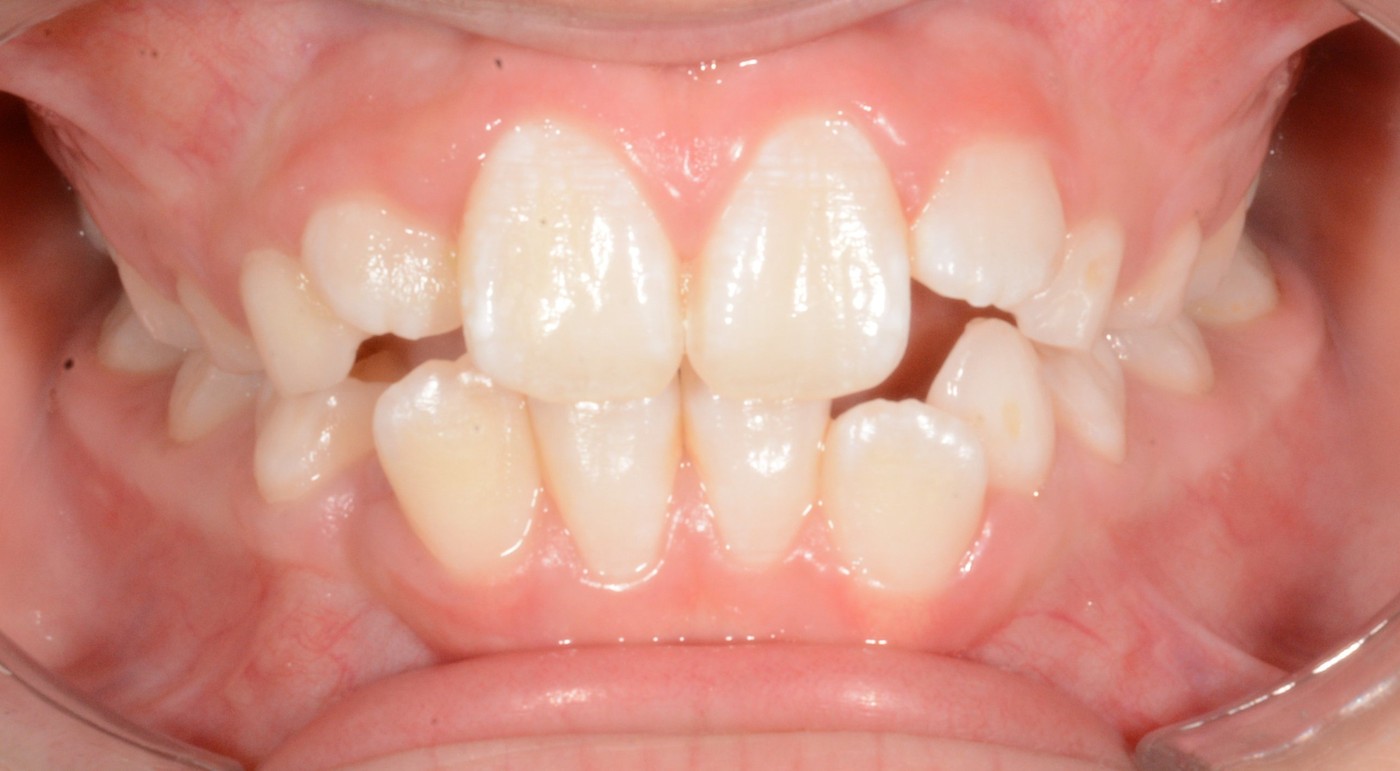
The reassuring part: where the habit stops before the adult front teeth come through, many of these changes improve on their own as the teeth continue to erupt. Once the adult teeth are in and the habit is still going, the changes are more likely to stay.
A rough age guide
- Under 3: no action needed. Mention it at a check-up if you like, but it’s not a problem to solve.
- 3 to 4: a good window to start gently encouraging them out of it, without pressure. Most children in this bracket are ready to be part of the conversation.
- 4 to 5: worth actively working on, and worth having the bite looked at so you know where you stand.
- 6 and over, with adult front teeth arriving: the point at which it’s worth getting the bite assessed rather than continuing to wait it out.
Thumb or dummy: is one better?
Dummies have one practical advantage: you can take them away. A thumb is always available, comes to bed with them, and can’t be left at grandma’s. In practice, dummy habits tend to be given up earlier for exactly that reason.
A thumb is also the shape it is. A dummy isn’t. The shape you choose makes a real difference to a growing mouth.
The dummy shape we recommend, and why
Two things about a dummy matter: how thick it is where it sits between the gums or front teeth, and where the teat directs its pressure once it’s inside.
A conventional dummy has a teat that is large and round at its base. That bulky base sits in the space the front teeth want to close into, and holds them apart for as long as it is in. Over time the front teeth take up the shape of what has been sitting between them.
The shape we recommend (Dentistar is the one we point parents to) is built the other way round. It is flat and thin where it passes the front teeth, so they can close close to normally, and then angles upward so the teat still presses against the palate.
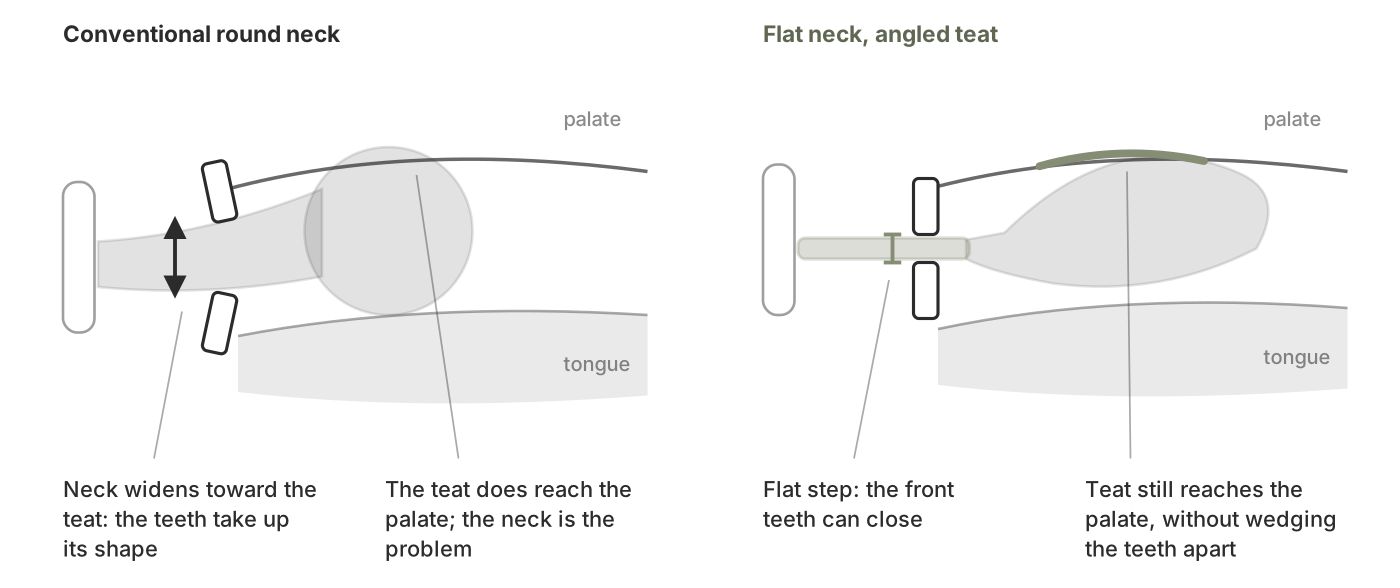
That upward pressure is the whole point. Contact between the tongue, the teat and the palate is the feedback a baby is actually after when they suck. A shape that delivers it without wedging the bite open settles the child and leaves the front teeth free to meet. Tongue-to-palate contact is the resting position that supports the upper jaw developing width as a child grows, which is the same principle behind everything we look at in children’s airway assessments.
Two honest caveats. Manufacturers publish quite specific figures about reduced open bite risk; we would rather explain the mechanism and let you look at the shape than repeat numbers. And no shape makes duration irrelevant: a well-designed dummy used for years still matters more than a poorly designed one given up at two.
Whatever the shape: nothing sweet on it. A dummy dipped in honey or juice is a decay risk in its own right.
How to help them stop
The approaches that work share a common feature: the child is on side. Shaming, pulling the thumb out, or making it a daily point of conflict tends to entrench it, because the habit is a comfort response and stress is what triggers it.
- Wait for a settled patch. Not the fortnight a new sibling arrives, or the start of school.
- Make it their decision. Children over about four often respond well to being asked whether they’d like to stop, and to being in charge of the plan.
- Track the wins. A simple calendar with a sticker for each day, and a reward at a set number. Focus on days managed, not days missed.
- Work out the triggers. If it’s tiredness, boredom or the car, aim at those moments specifically rather than at the habit in general.
- Give the hands something else. A fidget toy, a soft toy to hold at bedtime, a hand to hold in the car.
- Daytime first, night-time last. Sleep is the hardest and should be the final stage, not the first.
- Reminders, only with buy-in. A sock or glove at night, or a bitter-tasting varnish from the pharmacy, can work well, but only when the child has agreed to it and understands it as help, not punishment.
For dummies, the versions parents tell us work best are the deliberate goodbye: giving them to a new baby, leaving them out for a fairy, or a planned last night with the date on the calendar. Gradual withdrawal (sleep only, then nothing) also works. What rarely works is losing them accidentally and hoping nobody notices.
Where we come in
Two things, really. First, we can tell you whether the bite has actually changed, which is usually the question underneath the question, and take photographs so there’s something to compare against in a year. Second, where a child genuinely wants to stop and can’t, there are appliances that make it much harder to get satisfaction from sucking. Those are a later step, not a first one, and only appropriate when the child is on board.
Often the answer is that the habit is winding down on its own, the bite is fine, and nothing needs doing, which is worth hearing if you’ve been quietly worrying about it.
It’s a common conversation at check-ups here, and it usually starts with a parent mentioning it almost apologetically on the way out. You don’t need a separate appointment to ask; bring it up at their next check-up and clean. Book online or call us on (02) 9096 3895.
References
Borrie FRP, Bearn DR, Innes NPT, Iheozor-Ejiofor Z. Interventions for the cessation of non-nutritive sucking habits in children. Cochrane Database of Systematic Reviews 2015; CD008694. doi.org
Maintz M, Nalabothu P, Thieringer FM, Verna C. Influence of pacifier design on pacifier-palate contact: a finite element analysis. Head & Face Medicine 2025;21:50. doi.org
Red Nose Australia. Safe sleeping advice. rednose.org.au
FAQs
1. At what age should my child stop thumb sucking?
Most stop between two and four on their own. It’s worth actively working on from around four, and worth getting help if it’s still going when the adult front teeth arrive at about six.
2. Will my child’s teeth fix themselves if they stop?
Often, yes. Where the habit stops before the adult front teeth are through, the bite frequently improves as the teeth continue to erupt. Once the adult teeth are in, changes are more likely to persist. Every child is different, so an assessment is the only way to know.
3. Are dummies better or worse than the thumb?
The risk of an open bite is similar for both. Dummy sucking carries a higher risk of a narrowed upper arch and a crossbite at the back, while thumb sucking is more associated with the upper front teeth tipping forward. The practical difference is that a dummy can be taken away, so those habits tend to end earlier.
4. Does the shape of the dummy matter?
Yes. We recommend a flat-necked shape such as Dentistar: thin where it passes the front teeth so they can close, and angled upward so the teat still presses against the palate, which is the contact babies are seeking. It doesn’t make duration irrelevant, but it is a better shape for a growing mouth than a thick, round neck.
5. Should I use a bitter-tasting varnish?
It can help, but only for a child who has agreed they want to stop. Used as a punishment on a child who hasn’t, it tends to backfire.
6. My child only does it at bedtime. Does that still count?
It still counts, and the detail that matters is what happens once they are asleep. A thumb or dummy that settles them off to sleep and then falls out is doing far less than one that stays in all night, because the total number of hours is what drives the change. Night-time is also normally the last part of the habit to go. So it is worth mentioning at a check-up and keeping an eye on the bite, rather than assuming bedtime use is harmless.