
Patient resources | Aftercare
What to Do After Your Extraction
How to protect the socket while it heals, what to do about bleeding, and when to call us.
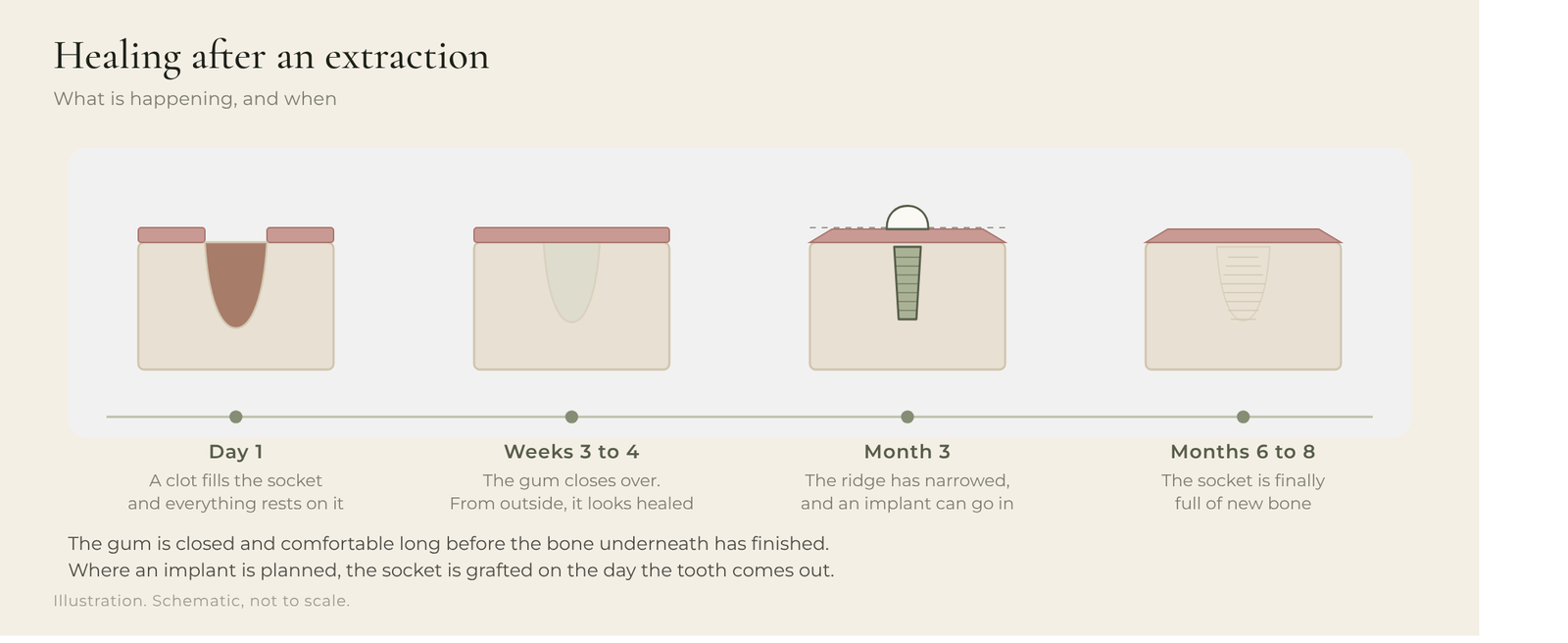
Download PDFThe initial healing period typically takes 1 to 2 weeks. Gum tissue takes about 3 to 4 weeks to heal, and complete healing of the bone can take about 6 to 8 months, depending on how you care for the area.
Some discomfort, bleeding and swelling should be expected over the next 24 hours as your mouth heals.
Occasionally the blood clot can dislodge (called a “dry socket”), and you may feel a sudden surge of pain within the first week after the extraction. Please contact us if this happens.
Do not disturb the wound
- Pressure from a piece of gauze is usually enough to stop bleeding and help a clot form in the socket. Remove the gauze after 20 minutes.
- Avoid rinsing your mouth, spitting, gargling or drinking through a straw for the next 48 hours, to prevent a dry socket.
- Brush your teeth gently for the next 48 hours without toothpaste, so you don’t need to rinse or spit.
- Avoid biting your tongue, cheek or lips while they are numb. It can take up to 6 hours for full sensation to return.
Avoid smoking, alcohol and exercise
Smoking, alcohol and exercise should be avoided for 48 hours to prevent a dry socket.
Bleeding
We will give you extra gauze packs. If bleeding continues, apply pressure by biting firmly on the gauze for 15 minutes while resting.
If bleeding persists, please contact us. After hours, advice and treatment can be sought at your local hospital.
Post-op care
- Keep your teeth and mouth as clean as possible after the extraction.
- After 48 hours, very gently rinse your mouth with warm salty water after every meal, making sure the water reaches the extraction site (half a teaspoon of salt in a cup of warm water).
- Soft foods, such as soup and scrambled eggs, are encouraged for the first few days.
Questions or concerns?
If you have any questions about these directions, or you have excessive bleeding or swelling, or persistent and severe pain, please contact us on (02) 9096 3895 or seek medical advice as soon as possible.
If you have difficulty breathing or swallowing, go to your nearest emergency department or call 000.
Disclaimer
This information is general in nature and does not replace the specific instructions your dentist gave you on the day.
Something not settling?
We check voicemail and email closely and will get back to you promptly. If you need to be seen, we will make time.