
Patient resources | Extractions
Expectations Following Dental Extractions
The symptoms that can follow a tooth removal, how likely they are, and what helps. To read before your extraction, so you can give informed consent.
Download PDFTooth removal, like any other surgical procedure, can have a number of post-operative symptoms. The following may occur in varying degrees, depending on the specific procedure and how difficult the extraction is. We have also included suggestions to help you minimise any symptoms.
Common post-operative symptoms
Swelling. Your face may swell and be sore, and you may have difficulty opening your mouth. Swelling subsides over 2 to 3 days, and can be relieved with an ice pack for 20 minutes at a time, several times a day, for 1 to 2 days after the procedure.
Pain. The pain you experience will vary depending on a number of factors, including your underlying pain threshold. Pain can usually be controlled with medication such as Nurofen or Panadol, taken as directed on the packet. Please speak to your doctor or pharmacist about the most suitable option for you if you are unsure. Nurofen also helps minimise swelling, but should only be taken after reading the product information. If you need stronger pain relief, contact us.
Bleeding. Minor bleeding can occur for 24 hours after any tooth removal. It can be controlled by biting on a rolled-up gauze pack placed over the extraction site. Your dentist will give you a pack at your appointment. If bleeding continues, contact us.
Dryness and cracking of the lips and corners of the mouth may occur, and can be relieved by applying a lanolin-type or paw paw ointment. Cleaning your remaining teeth is essential. If needed, use a child’s toothbrush.
Sutures may be used. They will either dissolve, or need removing 7 to 10 days after placement.
Less common, but important
Infection. Bone, gum and/or facial infection may occur after tooth removal. Rinsing with Savacol mouthwash (after the first 48 hours) can help prevent this. If you suspect an infection, contact your dentist immediately.
Delayed healing. Delayed and painful healing of the extraction site can occur. If your condition gets worse after 3 to 5 days, contact us immediately for prompt attention.
Numbness and altered taste. Altered sensation (numbness, burning, itching or altered taste) of the lips, teeth, chin, cheek or tongue can occur after an extraction. How long it lasts is uncertain, and in rare cases it may be permanent.
Root fracture. A root may fracture during removal. Where possible, it is removed at the same time. In some circumstances the root tip may be left in place and monitored, or a second appointment or referral may be needed.
Weakened jaw or bone fracture. Removing impacted teeth can temporarily weaken the jawbone. Avoid contact sport for at least four weeks after tooth removal. If the jaw fractures during surgery (unusual), it will be stabilised and may need referral to a specialist.
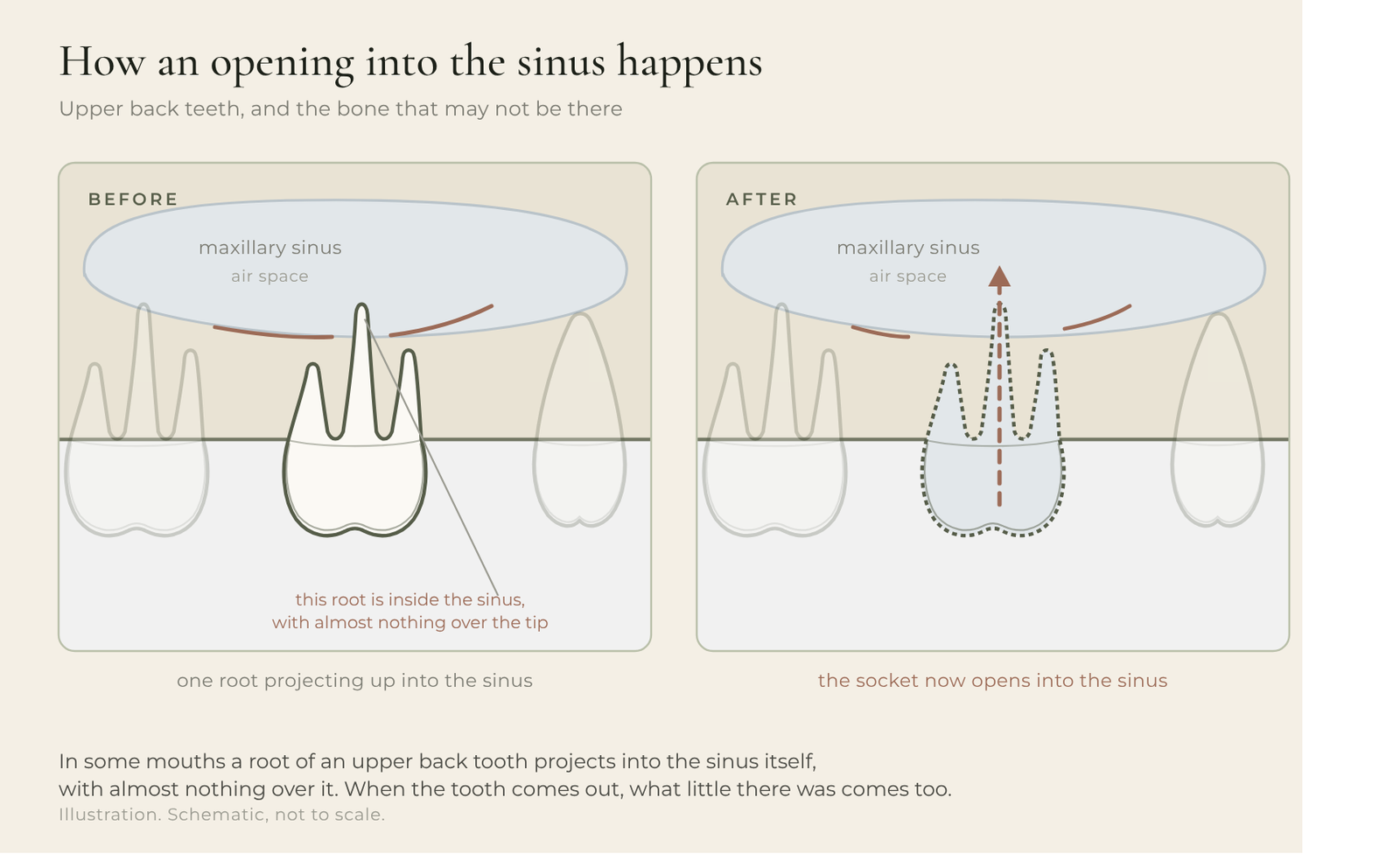
Sinus. When an upper back tooth is removed, its roots may enter the sinus, or a small hole may be created in the sinus floor. Usually this causes no problem and heals uneventfully. Where roots do enter the sinus, they need to be retrieved, either at a later appointment or by referral.
Allergy. Reactions to drugs, medications or anaesthetics can occur. If you notice an adverse reaction, stop taking the medication and contact us.
Informed consent
This information is to help you give informed consent before tooth removal. If you have any questions about the above, or would like to discuss anything in more detail, please talk to your dentist before your treatment.
If any problems occur, or you are concerned about your progress, please contact us on (02) 9096 3895.
Already had your extraction? See what to do after your extraction.
Disclaimer
All dental procedures involve potential risks and benefits. This information is general in nature and does not replace advice from your dentist.
Need a tooth out?
We will check the roots on your x-ray first, talk you through the risks for your tooth, and offer sedation if you are anxious.