
By Dr Emily So & Dr Alice Shan, Dentists
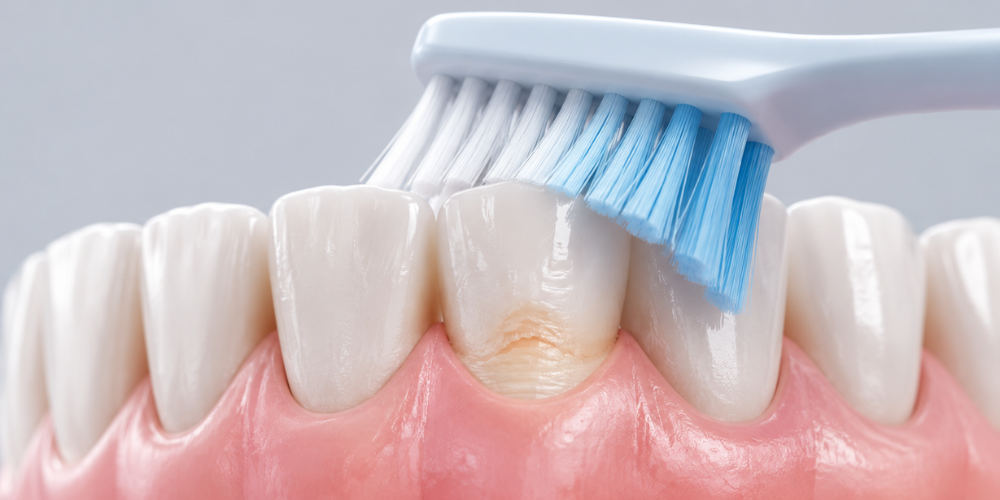
You probably brush your teeth twice a day without giving it much thought. Same toothbrush, same paste, maybe a quick scrub before heading out the door. But what if the very habit you trust to protect your teeth is actually wearing them down? That is the reality of toothbrush abrasion, a slow, mechanical loss of enamel and gum tissue caused not by what you eat or drink, but by how you brush.
Toothbrush abrasion is one of the most common forms of preventable tooth wear we see in practice. Unlike decay or staining, it does not arrive overnight. It builds up gradually, year after year, often in patients who consider themselves diligent about their oral hygiene. The good news is that with a few small adjustments to brushing technique, brush selection and pressure, abrasion is highly preventable.
What Is Toothbrush Abrasion and How Does It Differ From Other Forms of Tooth Wear?
Tooth wear can occur in several forms. Erosion is a chemical process driven by acid exposure. Attrition is wear caused by tooth-on-tooth contact, often linked to grinding or clenching. Abrasion, by contrast, is mechanical wear caused by an external object rubbing against the tooth or gum. In most cases, that external object is a toothbrush.
The damage typically appears at the gumline on the outer surfaces of the teeth, particularly along the canines and premolars. The enamel thins, the underlying dentine becomes exposed, and a small notch or wedge-shaped groove can form just below the gum. Over time, the gum itself may begin to recede, leaving the tooth root visible.
Because abrasion develops slowly and painlessly in the early stages, many people do not notice it until sensitivity sets in or until a routine examination reveals the change.
What Causes Toothbrush Abrasion in the First Place?
Toothbrush abrasion is rarely caused by a single factor. It usually develops from a combination of:
- Brushing with too much pressure
- Using a hard or medium bristle toothbrush
- Aggressive horizontal scrubbing motions
- Spending too long brushing in one area
- Brushing immediately after acidic foods or drinks, when enamel is temporarily softened
- Using highly abrasive whitening pastes daily
The combination of pressure, motion and bristle stiffness matters more than any single factor on its own. A heavy-handed brusher with a soft brush can still cause damage if the technique is wrong, just as a gentle brusher with hard bristles can wear down enamel over time.
What Does Toothbrush Abrasion Look Like?
Recognising the early signs of abrasion can help patients seek advice before more significant damage occurs. The visual progression typically moves through three stages.
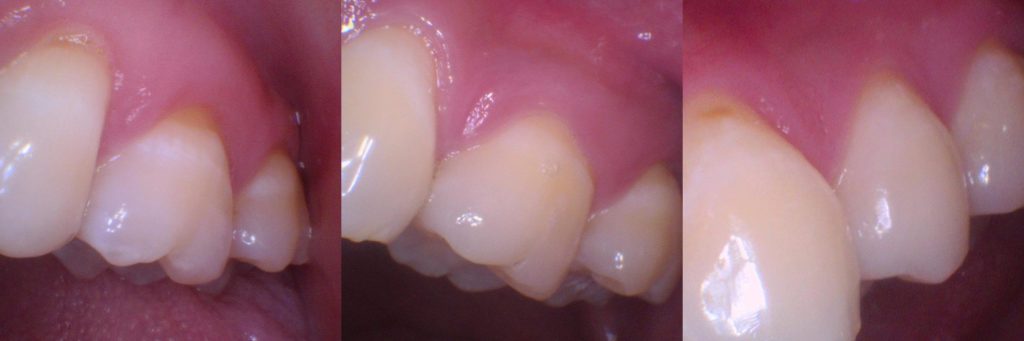
In mild cases, you may notice a faint dullness or flattening along the gumline. The enamel still appears intact but has lost some of its natural shine. There is usually no sensitivity at this stage.
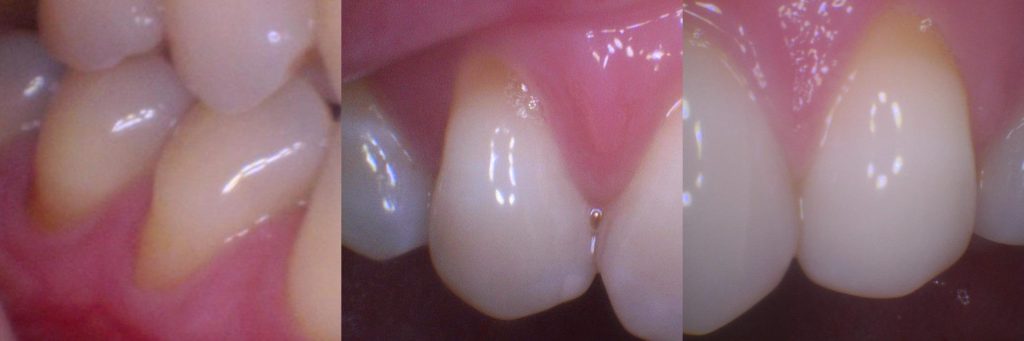
In moderate cases, small wedge-shaped grooves begin to form where the enamel meets the gum. The dentine underneath, which is yellower and softer than enamel, may start to show through. Sensitivity to cold drinks and air is common at this point.
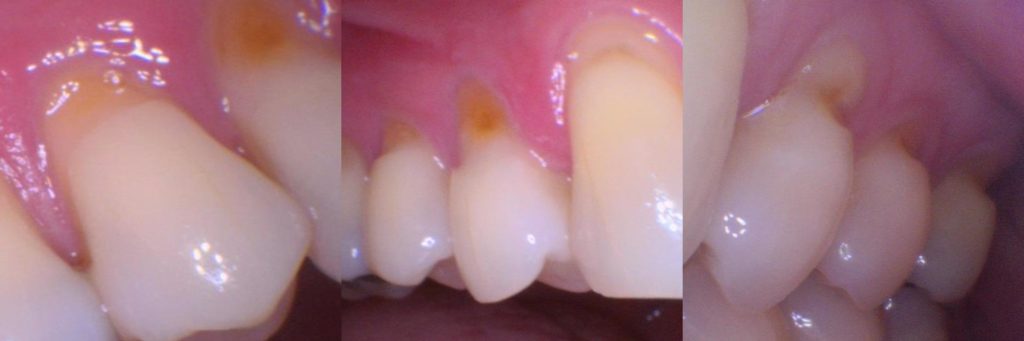
In severe cases, deep grooves and noticeable gum recession can leave large areas of the root surface exposed. Patients often experience persistent sensitivity, and the affected teeth may look longer than they used to. Restorative work may be needed at this stage to protect the tooth and reduce discomfort.
What Is the Modified Bass Technique and Why Does It Matter?
The Modified Bass Technique is widely recommended by dental professionals because it cleans effectively along the gumline without the aggressive scrubbing motion that causes abrasion.
The technique involves a few simple steps:
- Place the toothbrush at a 45 degree angle to the gumline.
- Apply gentle pressure so the bristles slip slightly under the gum margin.
- Use small, vibrating, circular motions in place rather than long horizontal strokes.
- After several seconds in one spot, sweep the bristles away from the gumline towards the chewing surface.
- Move to the next group of two or three teeth and repeat.
The advantage of this method is that the cleaning happens through the action of the bristle tips, not through force. The bristles do the work, your hand simply guides them. Once patients adjust to the rhythm, most find it more comfortable than scrubbing and notice less bleeding at the gumline within a couple of weeks.
Give it about two minutes, and work in a set order so that nothing is skipped. The surfaces most often missed are the inner surfaces of the lower front teeth, the inner surfaces of the upper back teeth, and the back of the last molar on each side. Finish by brushing the tongue.
| Technique element | Why it matters | What happens if it is wrong |
| Angle to the gumline | 45 degrees lets the bristle tips reach just under the gum margin, where plaque collects | Plaque stays at the gumline and the gums stay inflamed |
| Pressure | Light pressure lets the bristles flex and do the work | Enamel wear at the neck of the tooth, and gum recession |
| Motion | Small circles or vibrations in place clean without dragging across the tooth | Horizontal scrubbing carves notches into the gumline |
| Coverage | Outer, inner and chewing surfaces of every tooth, plus the tongue | Decay and gum problems start in the spots that get skipped |
| Duration | About two minutes gives every area its share of the time | Rushing concentrates the effort on the easy-to-reach teeth |
Why Do Soft Bristles Make Such a Difference?
Soft bristles are not just a comfort preference. They are a clinical recommendation backed by Australian and international dental guidance.
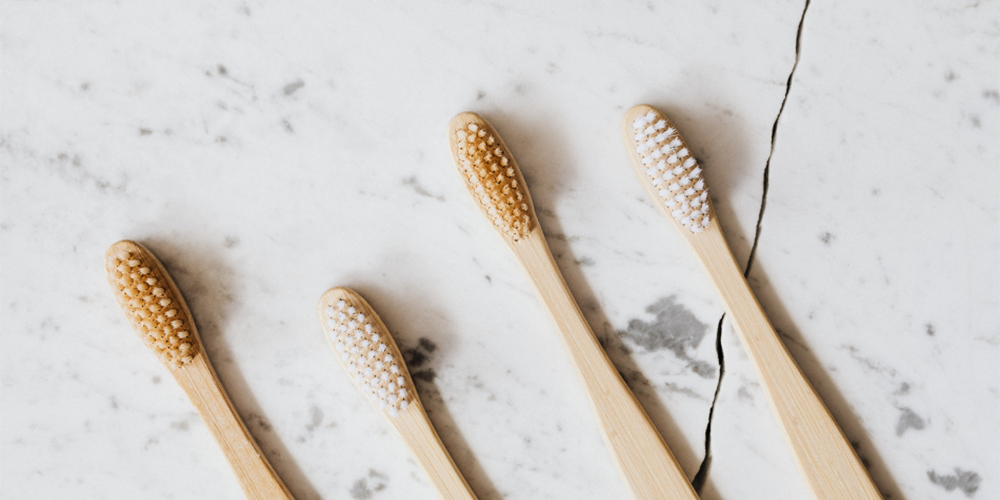
Bristle stiffness is the single easiest thing to change, and one of the few that reliably reduces wear at the gumline.
Hard and medium bristles are stiffer and less able to bend around the natural curves of the teeth. Instead of cleaning the surface gently, they tend to drag across the enamel and gum tissue, increasing the risk of abrasion and recession. Soft bristles flex at the tip, which allows them to follow the contour of each tooth, slip into the small space between gum and tooth, and clean effectively without scratching.
It is worth dealing with the obvious objection here, which is that firmer bristles must surely remove more plaque. They do not. How much plaque comes off depends far more on the angle, the time spent and whether every surface is reached than on how stiff the bristles are. A soft brush used properly cleans as well as a medium one, without the wear that comes with it.
| Brush Type | Bristle Stiffness | Risk of Abrasion | Suitability |
| Hard | Stiff, rigid bristles | High | Rarely recommended |
| Medium | Firm bristles | Moderate to high | Limited use, generally not advised |
| Soft | Flexible bristles | Low | Suitable for most adults and children |
| Extra soft | Very flexible bristles | Very low | Useful for sensitivity, recession or post-surgery care |
Replacing your toothbrush every three to four months, or earlier if the bristles begin to splay outwards, also matters. Worn bristles lose their flexibility and can act more like medium or hard ones.
If you already have recession, exposed root surfaces or sensitivity, the choice matters more rather than less. Root surface is softer than enamel and wears faster, so extra soft bristles and a light hand are usually what we suggest. The same applies if you are in braces, or have crowns, veneers or implants, where the brush needs to clean around the margins without scouring them. It is worth asking us to look rather than guessing in the supermarket aisle.
Are There Other Habits That Contribute to Enamel Wear?
Brushing technique is the central factor in abrasion, but a few other habits can accelerate enamel loss:
- Brushing immediately after acidic foods or drinks, before saliva has had a chance to remineralise the surface
- Using highly abrasive whitening toothpastes every day rather than occasionally
- Holding the toothbrush in a fist-style grip, which often increases pressure unconsciously
- Skipping interdental cleaning, which can lead to overcompensation by scrubbing harder elsewhere
Small adjustments, such as switching to a pen-style grip on the toothbrush, waiting at least 30 minutes after acidic foods before brushing, and choosing a non-abrasive paste for daily use, can meaningfully reduce wear over time.
Where Can You Get a Personalised Assessment of Your Brushing Habits?
At Oaks Dental, abrasion is something we look for during every routine examination, even when patients have no specific concerns. Often we are the first to notice the subtle changes at the gumline that signal a brushing technique issue, long before sensitivity or recession becomes obvious.
If you have noticed any of the patterns described above, faint notching at the gumline, increased sensitivity to cold, or teeth that look longer than they used to, it is worth booking a check-up. We can review your current brushing technique together, recommend a brush type that suits your mouth, and walk you through the Modified Bass method in person. Our focus is on practical, personalised advice that fits your daily routine, not generic instructions.
Preventative care is at the centre of how we work. Catching abrasion early means avoiding restorative treatment later, and protecting the enamel you already have is always preferable to replacing what has been lost.
The pattern we see most often on the lower north shore is a firm brush straight after a morning coffee on Military Road, which combines both kinds of wear described here. If you recognise any of these signs in your own smile, we invite you to book an appointment with our team. A short conversation now can save your enamel for decades to come.
References
Australian Dental Association, Dental Health Week resources https://www.ada.org.au/Dental-Health-Week
Australian Government Department of Health and Aged Care, Oral Health Resources https://www.health.gov.au/topics/oral-and-dental-health
National Health and Medical Research Council, Fluoride Guidelines https://www.nhmrc.gov.au/health-advice/public-health/water-fluoridation
Frequently Asked Questions
Can toothbrush abrasion be reversed? Enamel does not regrow once it is lost, but further wear can be prevented through technique adjustments, soft bristles and gentler pressure. In some cases, restorative materials can be used to protect exposed dentine and reduce sensitivity.
How do I know if I am brushing too hard? Common signs include splayed bristles within weeks of opening a new toothbrush, bleeding gums during or after brushing, and visible recession or notching at the gumline.
Are electric toothbrushes safer than manual ones for preventing abrasion? Many electric toothbrushes include pressure sensors that pause or alert you when too much force is applied, which can be helpful. Technique still matters, but the built-in feedback can reduce risk.
Should I switch to extra soft bristles if I already have recession? Extra soft bristles are often recommended for patients with existing recession or sensitivity. Your dentist or hygienist can advise based on your specific situation.
How long should I wait to brush after eating something acidic? A wait of around 30 minutes is generally recommended. This allows saliva to neutralise acid and remineralise the temporarily softened enamel.
Is a soft toothbrush enough to remove plaque? Yes. Used with the right angle, enough time and full coverage, soft bristles disrupt plaque as effectively as firmer ones.
Should children use a soft or a medium brush? Soft, in almost all cases, and sized to fit their mouth. Children tend to scrub rather than angle the brush, so the forgiving option is the sensible one.
Do I still need to floss if I brush well? Yes. A brush cannot reach between the teeth, which is where a good proportion of decay and gum inflammation starts. Skipping it also tends to make people brush harder elsewhere to compensate.