
By Dr Alice Shan & Dr Emily So, Dentists
The most common version of this conversation starts with someone in their thirties, mildly annoyed, saying they had braces for two years as a teenager and their bottom teeth are crooked again.
It isn’t that the treatment failed. It’s that teeth move for as long as you’re alive, and not everyone who has braces may be aware of this.
Why teeth drift back
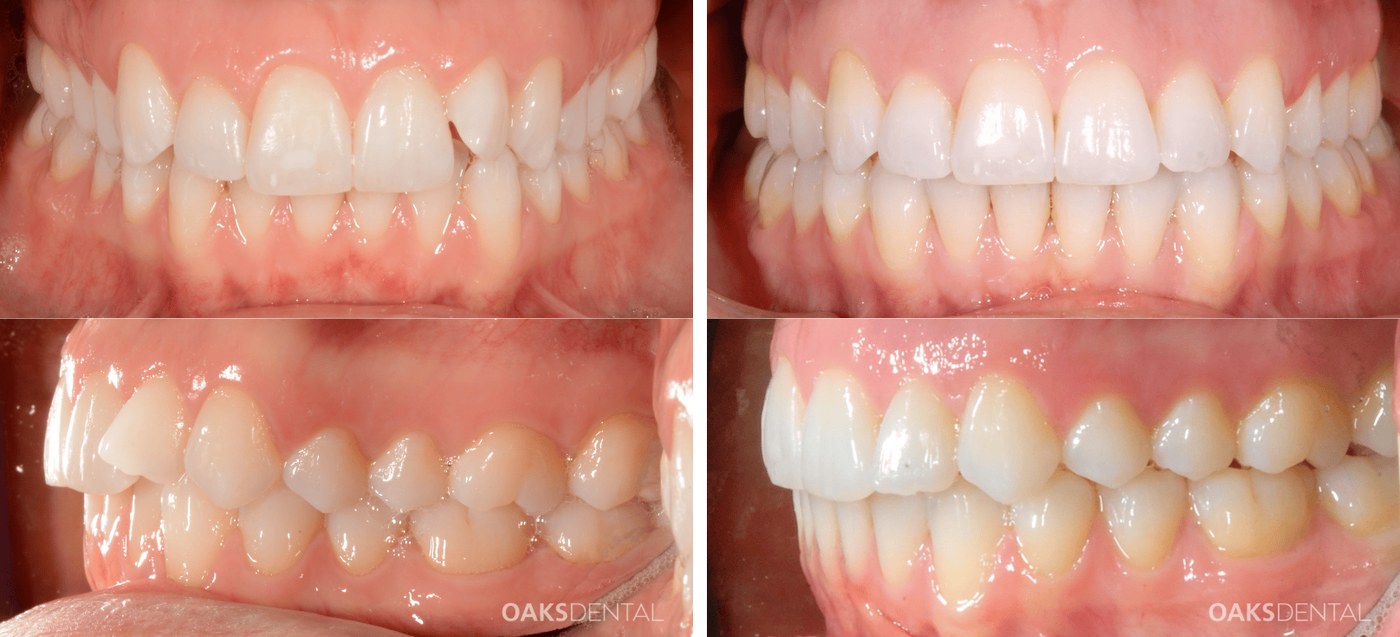
- The fibres around each tooth have memory. The elastic fibres in the gum that were stretched during treatment pull back for a long time afterwards, particularly where teeth were rotated.
- The jaw keeps growing after the braces come off. Late lower jaw growth continues into the late teens and beyond, and it tends to push the lower front teeth together.
- Lips, cheeks and tongue push constantly. Teeth sit in the balance between those forces. Change the balance and the teeth move.
- Ageing. Lower front crowding increases with age in most people, including people who never had orthodontic treatment at all.
That last point is the reassuring one. It isn’t that your treatment came undone. It’s that this happens to everybody, and a retainer is what holds it off.
There is a biological side to this as well. The tongue is the body’s own retainer, and nature’s best one: resting up against the palate with the lips sealed, it supports the arch from the inside, while a tongue that sits low (eg. a tongue-tie) or pushes forward (also known as a tongue thrust) works against it. Myofunctional therapy trains that muscle balance, so more of the long term holding is done by function rather than by an appliance, though it is a complement to a retainer rather than a replacement for one.
Fixed or removable, and what the evidence says
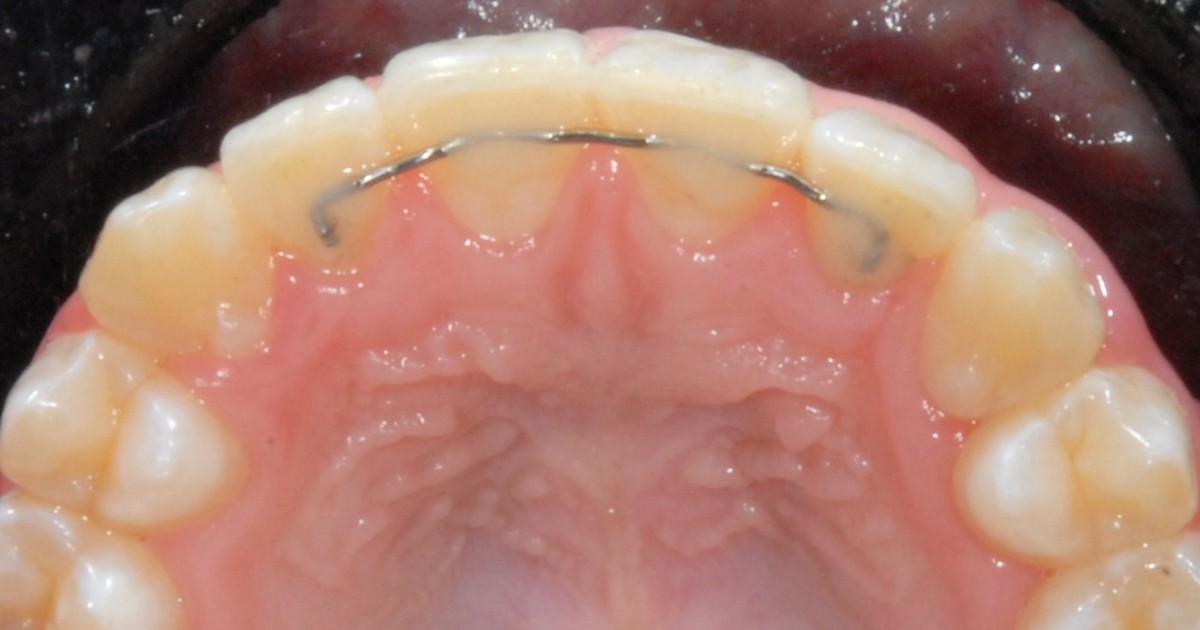
A fixed retainer is a fine wire bonded behind the front teeth. Nothing to remember, which is the entire argument for it.
A removable retainer is a clear plate or a Hawley, worn at night. Easier to keep clean, and the teeth are easier to floss.
The Cochrane review on retention, updated in 2023, compared the approaches and found the evidence low to very low certainty, with no firm conclusion that any one approach is better than another for keeping teeth straight. Compared with fixed retainers, removable retainers caused a bit more discomfort but were associated with better gum health: worn part-time they failed less often than a fixed retainer, worn full-time more often. Full-time wear gave no clinically meaningful stability advantage over part-time wear.
So the honest position is that the choice is about what fits your life and your gums, not about one being proven superior.
In practice we usually offer both. The fixed wire does the day to day holding, and a removable retainer made to sit over the top of it is the insurance: if the wire ever debonds or breaks, you have something to wear straight away so the teeth are not drifting while you wait to get in and see us.
Looking after a fixed retainer
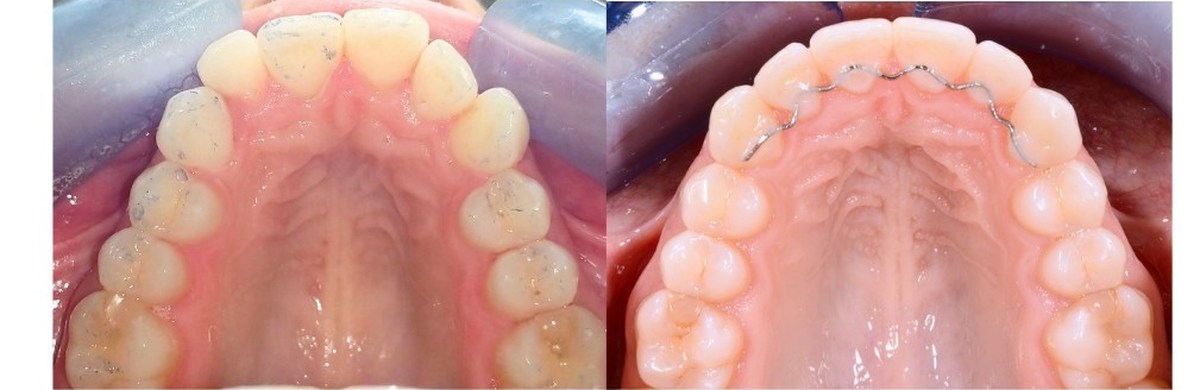
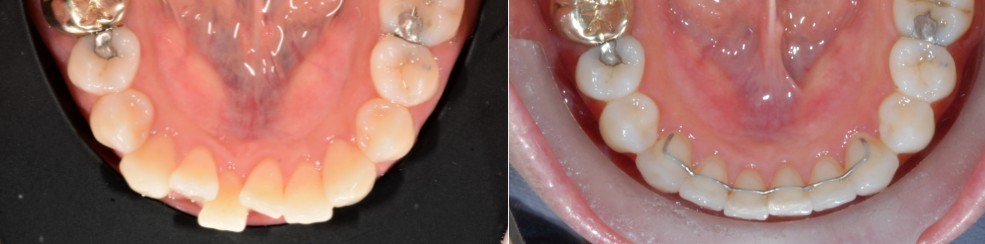
Two things people may not realise:
It is a plaque trap. A wire behind the lower front teeth collects calculus, and those teeth are the classic site for it anyway. Superfloss or interdental brushes, and a cleaning appointment that actually includes getting behind it.
And it can come unstuck without you noticing. If one end debonds, that tooth is now free to move while everything looks fine from the front. Run your tongue along it occasionally, and if anything feels different, get it checked rather than waiting for the next visit.
Looking after a removable retainer
A removable retainer is a consumable rather than a permanent appliance. Worn every night it picks up scratches and a dull film, clear plastic gradually stains from coffee, tea and red wine, and the material slowly loses its grip. Rinse it whenever it comes out and brush it gently with a soft brush and cool water. Not hot water, which warps it, and not toothpaste, which scratches the surface and gives stain somewhere to sit. A retainer cleaning tablet once or twice a week does the rest.
Expect to replace one periodically rather than keep it indefinitely. Cracks usually start at the thin edges, and a crack changes the way it holds, so it is worth having it checked rather than persevering with it.
If you grind or clench, a retainer will show you: holes worn through over the back teeth, or a plate that cracks within months. A retainer is thin by design and is not built to take that load. In that situation a heavier night guard is often the better appliance, because it can protect the teeth from the grinding and hold the position at the same time. If you are getting through retainers quickly, that is worth raising with us rather than simply replacing them.
How long do you wear a retainer?
Indefinitely, and it’s better to hear that plainly than to be told two years and feel misled later.
In practice that means most of the time at first, then most nights, then a few nights a week for the long term. That’s a small habit rather than a burden, but it doesn’t have an end date, and the people who stop entirely are the people who come back annoyed a decade later.
If you’ve lost it or it’s broken
Come in reasonably soon rather than waiting. Teeth move fastest in the first weeks without retention, and a replacement made now will usually still fit. Left for months, it often won’t, and then the conversation is about moving teeth back before holding them.
With a fixed retainer, a wire that has lost a little cement at one end can often be repaired by bonding that spot again rather than replacing the whole thing. It is worth knowing why that is not always the right answer. Cement bonds best to tooth, and a repair site almost always has old cement on it that cannot be completely cleaned off, particularly in the narrow space behind the wire where it sits against the tooth. So an addition usually does not last as long as the original bonding, and a spot that has been repaired several times becomes less reliable each round.
An upper fixed retainer is the harder case. Where the bite has changed and the lower teeth are now biting onto the wire, the force that broke it in the first place is still there after the repair. In that situation, and where the same spot keeps failing, a new retainer or a removable one is the more durable answer than another repair.
If they’ve already moved
Three reasonable options, and one of them is doing nothing:
- Hold where they are. A new retainer made to the current position stops further drift. Often the sensible answer if the change is minor and doesn’t bother you.
- Limited re-treatment. A short course of aligners to correct a small amount of movement, then retention properly this time. Usually months rather than years.
- Leave it. Minor lower crowding is extremely common and doesn’t need fixing unless you want it fixed.
Book online or call us on (02) 9096 3895.
References
Martin C, Littlewood SJ, Millett DT, et al. Retention procedures for stabilising tooth position after treatment with orthodontic braces. Cochrane Database of Systematic Reviews 2023; CD002283. doi.org
FAQs
1. How long do I have to wear a retainer?
Indefinitely, at reducing frequency. Teeth keep moving throughout life, so retention doesn’t have a finish line.
2. Is a fixed retainer better?
Not clearly. The evidence is low certainty and doesn’t establish one approach as better for stability. Fixed removes the need to remember; removable is easier to clean around.
3. My retainer feels tight after not wearing it. Should I force it?
It depends. If it feels a bit tight but still clicks fully into place, expect the teeth to be tender for a day or so, and that normally settles once you are wearing it regularly again. If you cannot seat it completely, do not force it. Come and see us instead, because a retainer that will not seat means the teeth have moved, and forcing it puts heavy pressure on individual teeth.
4. Will removing my wisdom teeth stop my teeth crowding?
The evidence doesn’t support that. Retention is what prevents crowding.
5. Can I get a new retainer if I had braces elsewhere?
Yes. We can scan and make one for your teeth as they are now.
6. Do retainers work if my teeth have already shifted?
They hold the current position rather than reversing the change. Where you want the movement corrected first, that’s usually a short course of aligners.