
Patient education | Tongue, lips and habits
Tongue-Tie: Why Function Matters More Than Appearance
Some families are told a tongue-tie explains everything. Others, that it rarely matters. Neither are asking the right question.
Tongue-tie is one of the most debated subjects in children’s health. Some families are told their child’s tongue-tie explains everything. Others are told tongue-ties are over-diagnosed and rarely matter. Both positions miss the question that actually decides it: how well does this tongue function?
What a tongue-tie is
Everyone has a lingual frenulum: the band of tissue under the tongue. A tongue-tie (ankyloglossia) is when that tissue restricts how the tongue moves. Seeing a frenulum is normal. The question is whether it limits function.
This is one point where the different schools of thought agree. The Australian Dental Association’s 2020 consensus statement says diagnosis should not rest on appearance alone, and requires a demonstrated functional limitation. Researchers including Dr Audrey Yoon and Dr Soroush Zaghi have spent years developing ways to measure that function objectively.
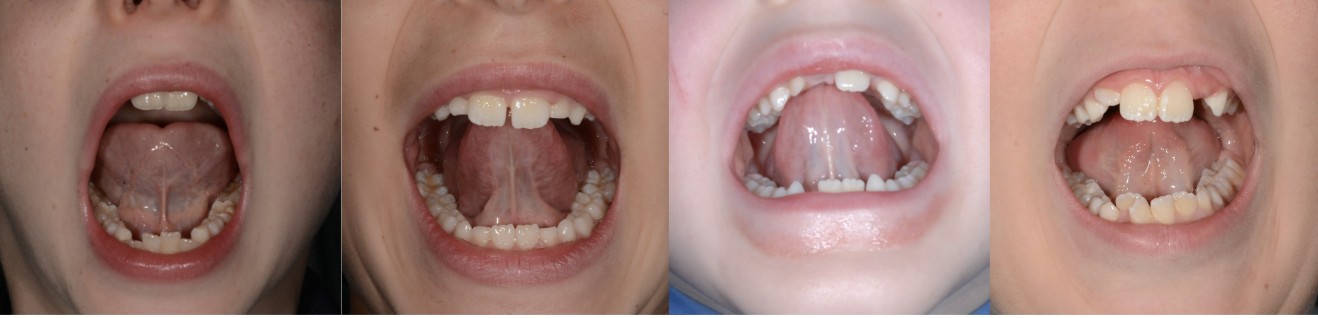
How tongue function is measured
The best-known tool from this research is the Tongue Range of Motion Ratio (TRMR). It compares how far the mouth can open with the tongue tip touching the roof of the mouth against how far it opens fully. In a study of 1,052 people, Yoon and colleagues found that this ratio was directly associated with restrictions in tongue function, where some traditional measurements of the frenulum were not. They proposed a four-grade functional scale, from normal mobility to severe restriction.
A later multicentre study of 611 people led by Dr Zaghi extended this to the back of the tongue, using lingual-palatal suction: measuring mouth opening while the whole tongue is suctioned up against the palate. It proved a far better measure of how well the back of the tongue can lift than tip measurements alone.
That matters because the term “posterior tongue-tie” is contested: the ADA consensus doesn’t accept it as a diagnosis. Rather than arguing over the label, a functional assessment measures what the back of the tongue can actually do.
Why tongue function matters beyond feeding and speech
At rest, the tongue should sit up against the palate. That light, constant pressure is one of the influences that helps the upper jaw develop its width during childhood. A tongue that can’t rest there tends to sit low, and the mouth often falls open.
In a study of 302 orthodontic patients, Yoon and colleagues found that restricted tongue mobility was associated with a narrower upper arch and a longer soft palate. Their work also links restricted tongue function with mouth breathing, snoring and other signs of disturbed sleep breathing.
These are associations rather than proof of cause, and it’s important to say so. But they explain why we look at the tongue as part of every airway and jaw growth assessment, not just when there’s a feeding problem.
Two more recent reviews have added to that picture. A 2024 systematic review and meta-analysis in Sleep and Breathing pooled six studies of children aged four to seventeen and found a short frenulum associated with roughly three times the odds of obstructive sleep apnoea, with a high palate carrying considerably higher odds again. The authors rated that evidence moderate, and were clear that the frenulum should not be judged in isolation. A 2025 systematic review in the Journal of Clinical Medicine found ankyloglossia linked to narrower arches and to Class III patterns, while concluding that any effect on hyoid position and airway space remains unclear, with the overall quality of evidence low.
The limitation running through all of it is worth stating plainly. These studies describe people who have a restriction, not people who have had one released. Whether a release changes arch width, palate shape or breathing has not been tested in a controlled way. So we treat these findings as a reason to assess the tongue carefully, not as a reason to release it.
Babies and feeding
In newborns, feeding difficulty is usually where the question first comes up. The ADA consensus found that release does not consistently improve feeding, and that skilled feeding support early on can reduce the need for surgery. So the first step is a lactation consultant or child health nurse, with a release considered where a genuine functional restriction remains.
Speech
This is where the evidence is least settled. The ADA consensus found no evidence of a causative link between tongue-tie and speech articulation problems. The functional research describes restricted mobility as one possible contributor to speech and swallowing difficulties. In practice, a speech concern starts with a speech pathologist, and a structural assessment sits alongside that. We have written separately about how the palate, the bite and tongue posture can affect certain speech sounds.
The gum behind the lower front teeth
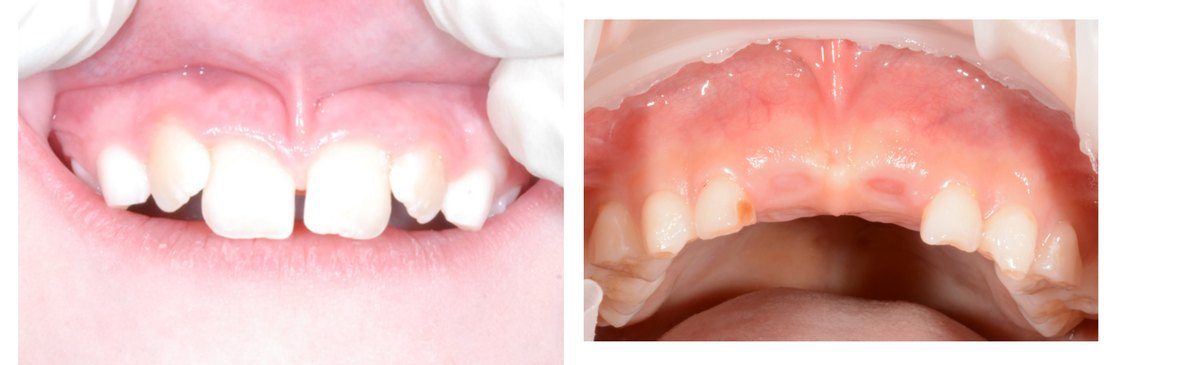
One further indication comes up less often and is worth knowing about. A frenulum attached high and tight can pull on the gum behind the lower front teeth every time the tongue moves, and that pull is associated with localised recession on the tongue side of those teeth, where the gum creeps down and exposes root.
The American Academy of Pediatric Dentistry’s policy on frenulum management takes a measured line. It recognises the association, but puts inflammation first: where plaque-induced inflammation is controlled, recession often settles without any surgery, and a release is considered only where it continues despite good hygiene. That is how we approach it too. Photograph and measure the area, sort out the cleaning, and watch it over a few months rather than moving straight to surgery.
Myofunctional therapy first, and afterwards
Perhaps the most important contribution of Dr Zaghi’s work is the principle that a release on its own is not the treatment. In his protocol, patients complete about a month of orofacial myofunctional therapy before the procedure (exercises that build awareness and strength in the tongue and surrounding muscles) and continue for at least two months afterwards, retraining how the tongue rests, swallows and moves.
We have written about what that therapy involves, and how it supports early orthodontic treatment, in myofunctional therapy and early orthodontics.
The reasons are practical. Some people improve enough with therapy that a release isn’t needed. For those who do proceed, therapy prepares the muscles to use their new range, and helps prevent the tissue re-attaching as it heals.
What the evidence on release shows, honestly
Dr Zaghi and colleagues reported on 348 children and adults who had a lingual frenuloplasty with myofunctional therapy. Most reported improvements in mouth breathing, snoring, clenching, sleep quality and muscle tension around the neck and face, and there were no major complications. Post-operative discomfort was common and short-lived, and a small proportion needed a revision.
The authors are clear about the limitations: it was a retrospective study from a single surgeon, based on patient-reported surveys and without a control group, and they call for long-term studies with objective measures. So it is a promising result for carefully selected patients, not a guarantee, and we present it that way.
One distinction worth making: the ADA consensus found no evidence for the repeated wound “stretches” parents are sometimes told to do on babies after a release. That is different from structured myofunctional therapy for older children and adults, which is an active retraining programme rather than stretching a wound.
What we do
- Assess function, not appearance: tongue range of motion, including the back of the tongue, alongside how the tongue rests, how your child swallows and breathes, and how the palate and jaws are developing.
- Start with myofunctional therapy where the tongue is restricted, working with experienced myofunctional therapists, and reassess as it progresses.
- Coordinate a release where a functional restriction remains, with therapy before and after, through the paediatric dental colleagues we work closely with.
- Stay involved throughout: the assessment, the plan, and the follow-up of your child’s tongue function, jaw growth and breathing remain with us, alongside lactation consultants for babies and speech pathologists where they’re needed.
If you’ve been told your child has a tongue-tie (or been told they don’t, and you’re still wondering), a functional assessment gives you a clearer answer. It is part of how we look at every child’s airway and jaw growth at their check-up.
Any surgical or invasive procedure carries risks. Before proceeding, you should seek a second opinion from an appropriately qualified health practitioner.
References
Yoon A, Zaghi S, Weitzman R, et al. Toward a functional definition of ankyloglossia: validating current grading scales for lingual frenulum length and tongue mobility in 1052 subjects. Sleep and Breathing 2017;21(3):767–75. link.springer.com
Yoon AJ, Zaghi S, Ha S, Law CS, Guilleminault C, Liu SY. Ankyloglossia as a risk factor for maxillary hypoplasia and soft palate elongation: a functional-morphological study. Orthodontics & Craniofacial Research 2017;20(4):237–44. onlinelibrary.wiley.com
Zaghi S, Valcu-Pinkerton S, Jabara M, et al. Lingual frenuloplasty with myofunctional therapy: exploring safety and efficacy in 348 cases. Laryngoscope Investigative Otolaryngology 2019;4(5):489–96. pmc.ncbi.nlm.nih.gov
Zaghi S, Shamtoob S, Peterson C, et al. Assessment of posterior tongue mobility using lingual-palatal suction: progress towards a functional definition of ankyloglossia. Journal of Oral Rehabilitation 2021;48(6):692–700. onlinelibrary.wiley.com
Australian Dental Association (convened). Ankyloglossia and Oral Frena Consensus Statement, June 2020. aapd.org.au
Camañes-Gonzalvo S, Montiel-Company JM, Paredes-Gallardo V, et al. Relationship of ankyloglossia and obstructive sleep apnea: systematic review and meta-analysis. Sleep and Breathing 2024;28:1067–78. doi.org
Kotarska M, Wądołowska A, Sarul M, Kawala B, Lis J. Does ankyloglossia surgery promote normal facial development? A systematic review. Journal of Clinical Medicine 2025;14(1):81. doi.org
American Academy of Pediatric Dentistry. Policy on management of the frenulum in pediatric patients. aapd.org
Frequently asked questions
My child has a visible frenulum. Is that a tongue-tie?
Not on its own. Everyone has one. A tongue-tie means the frenulum restricts how the tongue moves, which is assessed by measuring function.
How do you measure tongue function?
Using measures such as the Tongue Range of Motion Ratio, which compares mouth opening with the tongue tip on the palate against full opening, and lingual-palatal suction for the back of the tongue, alongside how the tongue rests, swallows and moves.
Can a tongue-tie affect jaw growth or breathing?
Research has found restricted tongue mobility associated with a narrower upper jaw, a longer soft palate, and mouth breathing and snoring. These are associations rather than proven causes, which is why each child is assessed individually.
Why myofunctional therapy before a release?
It strengthens and retrains the tongue, sometimes enough that a release isn’t needed, and prepares the muscles to use their new range if it is.
Will a release fix my child’s speech?
The evidence for speech is limited. A speech pathologist should lead on speech, with a tongue assessment alongside.
What about babies with feeding problems?
Skilled feeding support first, from a lactation consultant or child health nurse. A release is considered where a genuine restriction remains.

About the authors
Dr Emily So and Dr Alice Shan are the principal dentists and co-owners of Oaks Dental in Neutral Bay. They are committed to providing thoughtful, evidence-based care that looks beyond treating individual teeth to support each patient’s overall oral health, function and wellbeing.
Disclaimer
All dental procedures involve potential risks and benefits. The information provided in this blog is general in nature and should not be taken as medical advice. We recommend that you seek guidance from a suitably qualified health professional before making decisions about your oral health. Where appropriate, you may also wish to consider obtaining a second opinion.
Any images or videos featured are shared with the informed consent of our patients and are intended for educational purposes only. They are not a guarantee of results, as every patient is unique. Treatment outcomes, including recovery, potential complications and effectiveness, can vary from person to person.
Not sure whether it is restricting anything?
We assess what the tongue can actually do rather than how the frenulum looks, and we will say plainly when nothing needs releasing.