
By Dr Alice Shan & Dr Emily So, Dentists
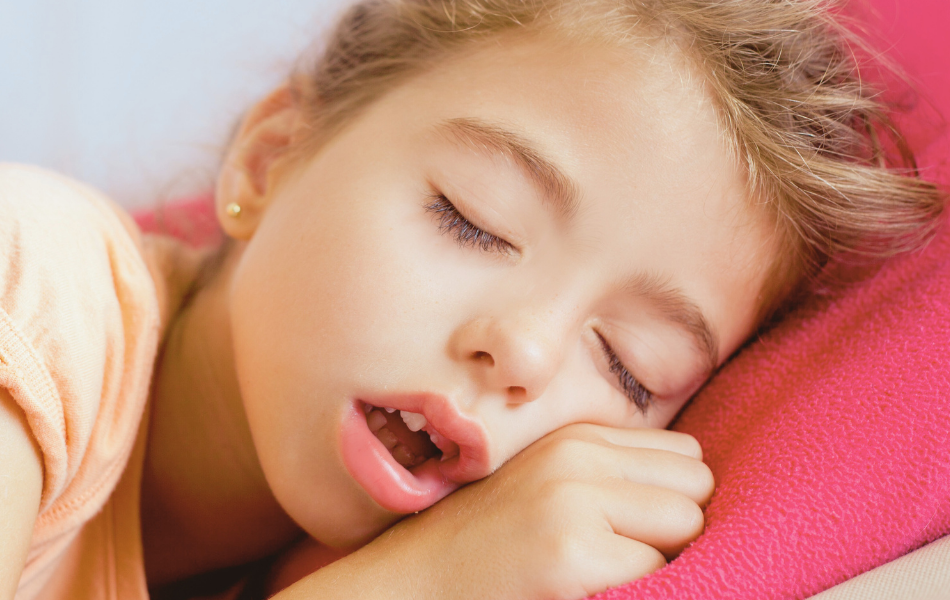
Most parents mention it almost as an aside. They’ll be in the chair for their child’s check-up and say something like “he snores like a grown man” or “she sleeps with her mouth open, always has.” It usually comes with a laugh, because it seems like a quirk rather than a question.
It’s worth asking about. Snoring in adults is common enough that we tend to treat it as background noise. In children it is less common, and when it happens most nights it is one of the few signs a young child can give you that their breathing is working harder than it should while they sleep.
What normal children’s sleep breathing looks like
A settled child breathes through the nose, quietly, with lips gently together. You should be able to stand in the doorway and not hear much at all. Occasional snoring during a cold or a bad hay fever week is ordinary and passes with the congestion.
What’s worth noting is the pattern that doesn’t pass: audible breathing most nights, week after week, regardless of whether they’re unwell.
The signs parents actually notice
They fall into two groups, and parents usually only connect them once someone points out that they might be the same story.
At night
Signs that breathing is taking more effort than it should:
- Snoring or noisy breathing on most nights
- Restless sleep: covers thrown off, odd positions, neck extended back
- Grinding or clenching
- Night terrors, or waking repeatedly
- Bedwetting past the age you’d expect it to have stopped
- Dry, chapped lips and a dry mouth on waking
During the day
Signs that the sleep isn’t doing its job:
- Mouth open at rest; watching television, concentrating on homework, in photos
- Waking unrefreshed, or being very hard to wake
- Dark shadows under the eyes that don’t track with how much sleep they got
- Difficulty settling or concentrating; in children, tiredness often looks less like sleepiness and more like being wired, emotional or unable to sit still
Two things worth saying plainly about that second list. These signs have many possible causes, and sleep is only one of them. Noticing them doesn’t mean your child has an airway problem. And they are things that travel with disturbed sleep in the research, not things disturbed sleep has been shown to cause. What they are good for is prompting the question.
One sign on its own usually means very little. Several together, consistently, is the pattern worth investigating.
What can be behind mouth-breathing
Night-time mouth breathing is a symptom with several possible contributors, and often more than one is at play:
- Enlarged tonsils or adenoids. Very common in young children and one of the more frequent reasons a child’s airway is narrowed at night. This sits with your GP or an ENT.
- Nasal congestion and allergy. Persistent hay fever or a blocked nose makes nose breathing hard work, so the mouth takes over.
- The shape of the upper jaw. A narrow upper arch or a high, vaulted palate reduces the space available inside the nose above it. This is the part a dentist can see and assess.
- Tongue position. A tongue that rests low in the mouth, rather than up against the palate, doesn’t provide the light outward pressure that supports normal upper jaw width during growth.
What a dentist can and can’t tell you
This is the part worth being clear about, because it’s where a lot of online information goes wrong.
Dentists do not diagnose obstructive sleep apnoea. A diagnosis comes from a paediatrician or sleep physician, sometimes after a sleep study. What we can do is screen: look at the structures that influence how much room there is to breathe, note what we see, and make sure the right people are looking at it. In practice that means examining the width and shape of the upper jaw, the palate, how the teeth meet, tonsil size as visible on examination, the resting position of the lips and tongue, and any wear from grinding.
If what we find suggests the airway is a factor, we write to your GP with what we’ve seen and work alongside whoever else is involved: ENT, paediatrician, sleep physician, speech pathologist. Dentistry is one piece of that picture, not the whole of it.
Why the timing matters
The face and jaws do most of their growing in childhood. Where the shape of the upper jaw is contributing, that shape is far easier to influence while a child is still growing than once growth has finished. That is the reason for looking earlier rather than waiting to see whether it settles: not because every child needs treatment, but because the window in which the simplest options are available doesn’t stay open indefinitely.
Often the answer after an assessment is that no appliance is needed yet. That doesn’t mean nothing happens. Where the airway, the sleep or the muscles around the mouth are part of the picture, those are the things we work on first, because they are what shapes the growth, and they are more changeable early than late.
What an airway-focused assessment involves
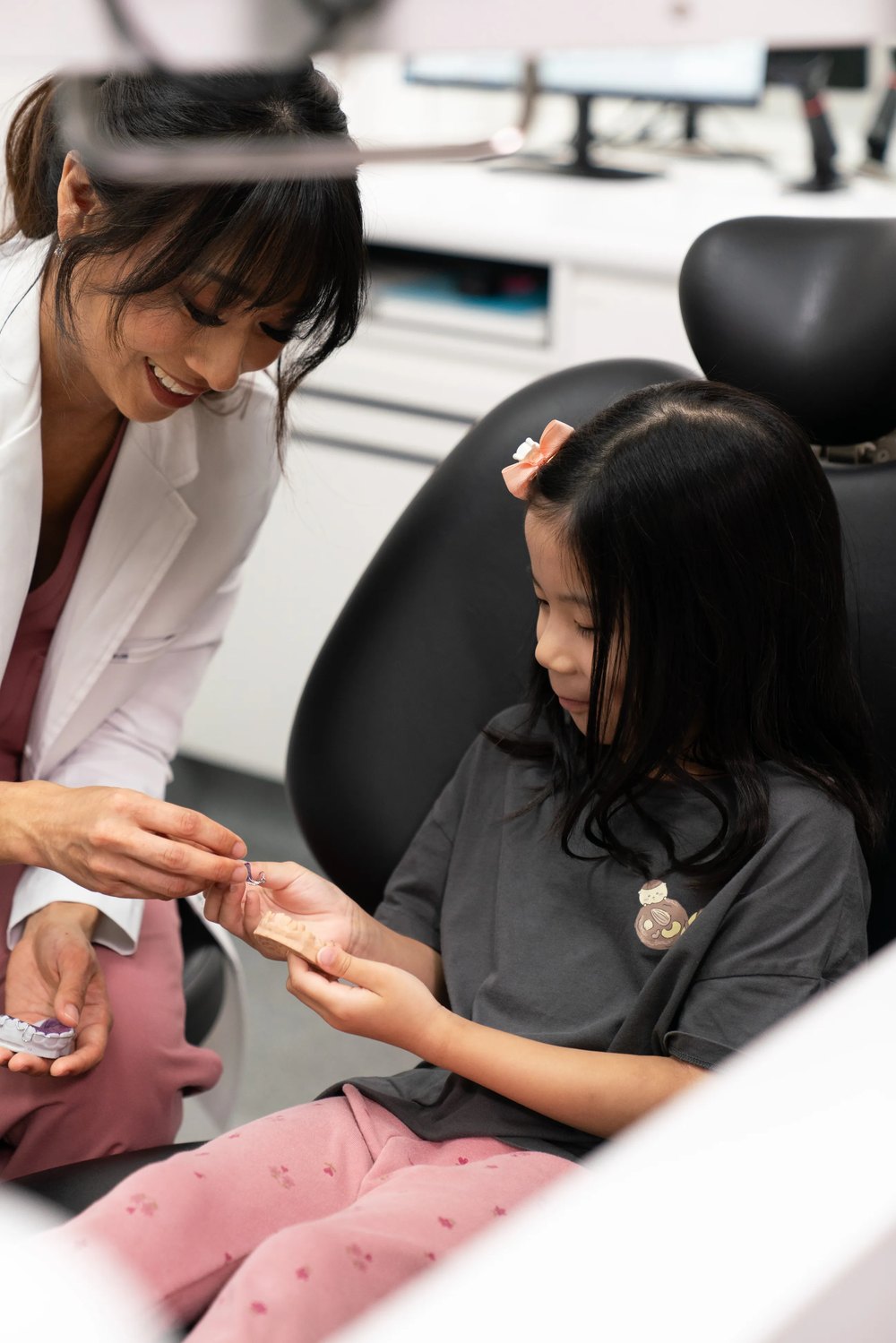
Nothing uncomfortable, and nothing your child needs to prepare for. We’ll talk with you about what you’ve noticed at home and how they sleep, then examine the mouth, jaws and bite, look at lip and tongue posture at rest, and take photographs. Where it will change what we recommend, we may take an x-ray, but only where there’s a clinical reason, never as routine. Then we sit down and go through what we found, in plain language, and what the options are, including doing nothing for now.
If you’ve been wondering about it
If your child snores most nights, sits with their mouth open, or wakes up as tired as they went to bed, it’s worth mentioning to us and to your GP. You don’t need a separate appointment: airway, sleep and jaw growth are part of what we screen at every child’s routine check-up, which is where most of these conversations with families around Neutral Bay, Cremorne and Mosman actually start. Book online or call us on (02) 9096 3895.
References
Marcus CL, et al. Diagnosis and management of childhood obstructive sleep apnea syndrome (American Academy of Pediatrics clinical practice guideline). Pediatrics 2012;130(3):576–84. doi.org
American Academy of Pediatric Dentistry. Policy on obstructive sleep apnea (revised 2026). www.aapd.org
American Speech-Language-Hearing Association. Orofacial myofunctional disorders (Practice Portal). www.asha.org
FAQs
1. Is snoring in children normal?
Very occasional snoring during a cold or hay fever is ordinary. Snoring on most nights, over months, is less common and worth having looked at.
2. At what age should I raise it?
Any age. There’s no minimum. If you’ve noticed it, mention it at their next visit.
3. Can a dentist diagnose sleep apnoea in my child?
No. Diagnosis comes from a paediatrician or sleep physician, sometimes with a sleep study. A dentist screens for structural contributors and refers on.
4. Does mouth breathing affect how the face grows?
Habitual mouth breathing has been associated with differences in facial and jaw development, and research in this area is ongoing. It is one of the reasons we assess it during growth rather than after.
5. Will my child definitely need treatment?
Not necessarily, and an appliance is rarely the first step. Where breathing, sleep or oral muscle function are part of the picture, those come first. Every child is different and any recommendation follows an individual assessment.
6. Do we need a referral to come in?
No referral is needed to see us. If we think other input is useful, we’ll write to your GP.