
Patient education | Gum health
Gum Disease Doesn’t Hurt Until It Does: What Your X-rays Show
Periodontitis is painless by design. What the probe measures, what a film shows, and why turning up for maintenance matters more than which treatment you had.
Almost every other dental problem announces itself. Decay eventually aches. A cracked tooth gives you a sharp twinge when you let go of a bite. An abscess swells. Gum disease does none of that, and it is the reason people are surprised to be told they have lost a third of the bone around a tooth that has never hurt once.
This post is about what we are actually looking at when we measure your gums and read your x-rays, and why the numbers matter more than how your mouth feels.
It does not hurt, and that is not an accident
The obvious explanation is that there is nothing much happening. The real explanation is more interesting.
Periodontitis generates exactly the inflammatory chemicals that normally cause pain. The bacteria involved, and the body’s response to them, interfere with those signals so that the nerve endings never become sensitised. Researchers have given this a name: endogenous localised hypoalgesia. The pain pathway is being actively switched off while the damage continues.
So the absence of pain is not reassurance. It is part of how the disease works. And the damage itself is not your teeth rotting. It is the foundation being dismantled by your own immune system in response to bacteria it cannot clear.
How common it is in Australia
The National Study of Adult Oral Health found moderate or severe periodontitis in 30.1 per cent of Australians aged 15 and over. It rises steeply with age: around 12 per cent at 15 to 34, a third at 35 to 54, half at 55 to 74, and about 69 per cent over 75. Globally, more than a billion people have severe periodontal disease.
Two numbers in that study are worth putting side by side. Just under 29 per cent of adults had a pocket of 4mm or more. But 52.7 per cent had lost 4mm or more of attachment.
That gap is the single most useful thing to understand about your gums, and it explains why the chart has more than one column.
Why the chart has more than one number
When we run a fine probe around each tooth, we are recording several different things.
Probing depth is how far the probe goes down beside the tooth from the gum margin. Up to about 3mm is healthy.
Recession is how far the gum has crept back from where it started.
Attachment loss combines the two. It is the cumulative total of what has been lost, and it is the honest measure of how much support a tooth has left.
Here is why that matters. A tooth with a 3mm pocket and 4mm of recession has lost as much support as a tooth with a 7mm pocket and no recession. The first one looks fine on pocket depth alone. If someone tells you your pockets are all normal and nothing else, you have been given one of the three numbers.
Bleeding on probing is the fourth. Healthy gums have bleeding at under 10 per cent of sites. Between 10 and 30 per cent is localised gingivitis, above 30 per cent is generalised.
Bleeding is more useful as a negative test than a positive one. Gums that do not bleed are a good indicator of stability. Gums that do bleed are a much weaker predictor of active disease, which is why we record it site by site rather than as a single verdict.
Staging and grading, in plain terms
Since 2018 periodontitis has been described with a stage and a grade, the way many medical conditions are.
The stage is how much damage there is. Stage I is under 15 per cent bone loss. Stage II is 15 to 33 per cent. Stage III means the bone loss extends into the middle third of the root or beyond, with up to four teeth already lost to the disease. Stage IV adds more than four teeth lost, or a bite that has started to collapse, with teeth drifting or flaring.
The grade is how fast it is moving, estimated by dividing the percentage of bone loss by your age, or by comparing records five years apart.
What surprises most people is where smoking and diabetes enter. They are written into the grade itself. Fewer than ten cigarettes a day moves you to grade B. Ten or more moves you to grade C. An HbA1c under 7 per cent is grade B, 7 per cent or above is grade C. Those factors are not background information we mention in passing. They are part of the diagnosis.
What the x-ray shows, and what it misses
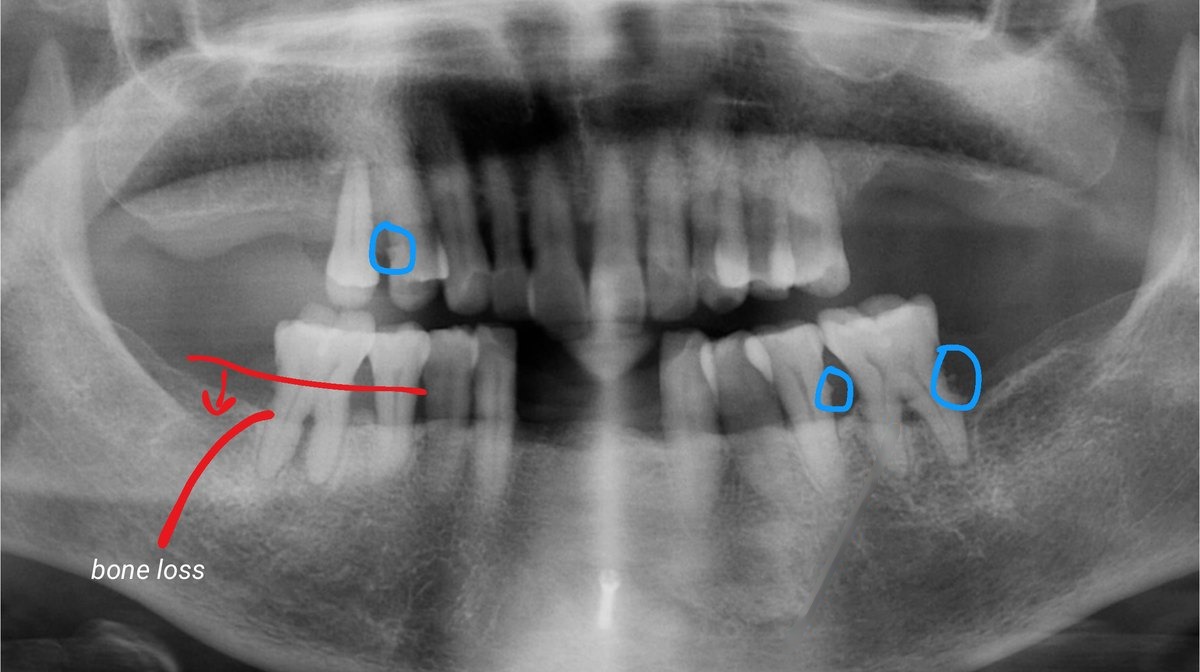
A radiograph shows bone level. It is the only way to see how much height has been lost around the roots, and comparing films taken years apart is the clearest evidence of whether the disease is progressing or holding.
It is also worse at this than most people assume. Across nearly 2,000 sites with small amounts of bone loss, periapical films detected 75 of them and a panoramic film detected 16. Panoramic radiographs systematically underestimate early bone loss. Two-dimensional films cannot show the bone on the cheek or tongue side of a tooth at all, only between the teeth.
So the probe and the film answer different questions. The film shows the history, in bone. The probe shows what is happening now, in inflammation. Neither replaces the other, and this is why a chart and an x-ray are both part of a check-up and clean rather than alternatives to each other. If you want the detail on dose, we have written about how much radiation is in a dental x-ray.
Calculus, and an honest admission
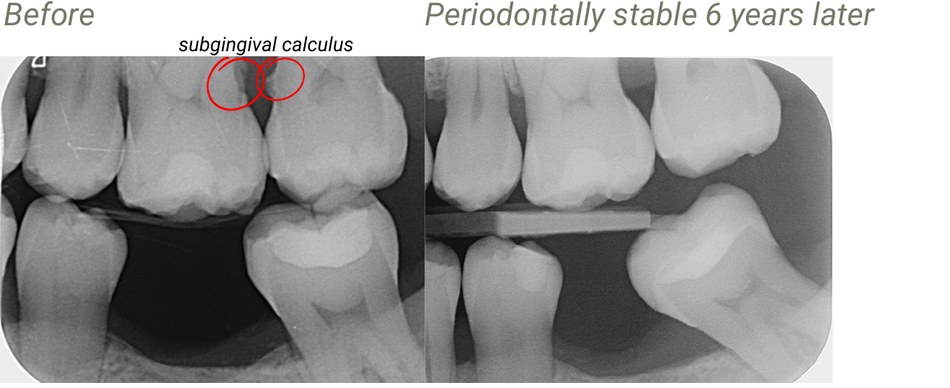
Calculus is plaque that has mineralised onto the tooth. Once it has hardened you cannot brush it off, and the part under the gum is the part that matters, because it holds bacteria against the tissue that anchors the tooth.
Removing it is the therapeutic half of a clean. It is also harder than it looks. In one study, clinicians judged calculus to be left behind on 19 per cent of root surfaces after instrumentation. Microscopic examination found it on 58 per cent.
We tell patients this for a reason. It is the clearest answer to why periodontal treatment is a programme rather than an appointment.
What treatment achieves
Pooled across 19 randomised trials, cleaning below the gum reduced pocket depth by about 1mm at three to four months and 1.4mm at six to eight months, closing 57 per cent of pockets at the first interval and 74 per cent by the second.
The European guideline sets this out in steps. Step one is behaviour change, cleaning above the gum, and dealing with risk factors, including smoking and diabetes control. Step two is cleaning below the gum. Lasers and photodynamic therapy are specifically not suggested. Step three deals with pockets that remain deep, by repeating the instrumentation or by surgery. Step four is maintenance at intervals set for you, anywhere from three to twelve months.
The endpoint is defined: no pockets of 5mm or more that bleed, and none of 6mm or more.
Realistically, pocket reduction comes largely from inflammation resolving and tissue reattaching. Bone does not grow back as a general rule. Regeneration is a specific surgical procedure for specific defect shapes, not an outcome of a clean. And there are trade-offs worth knowing before you start: as inflammation settles, gums shrink, which can mean more visible recession, sensitive root surfaces and gaps between teeth that were not there before.
Does it stay stable?
This is the question people actually want answered, and the evidence is encouraging without being a promise.
In a practice-based study following patients through nearly seven years of maintenance, tooth loss ran at 0.14 teeth per patient per year. Just under 56 per cent of patients lost no teeth at all, and a further 22 per cent lost one.
The study also identified which teeth were at risk, which is more useful than a blanket reassurance. A pocket of 6mm or more carried nearly seven times the risk of losing that tooth. Marked mobility carried about eight times. A deep furcation defect between the roots of a molar carried about ten times.
And the finding we think matters most: a 2025 review of outcomes at ten to twenty years found that which initial treatment you had made little difference, with around 3 per cent of teeth lost overall. What predicted long-term stability was adherence to maintenance. Turning up is doing more work than the choice of procedure.
Smoking and diabetes
Pooled across 14 prospective studies, smoking raises the risk of periodontitis onset and progression by about 85 per cent. Its effect on treatment is larger than that suggests: after gum surgery, 47 per cent of sites deeper than 7mm reached healthy depths in non-smokers, against 16 per cent in smokers.
The encouraging half: the risk of losing teeth declines towards never-smoker levels after roughly fifteen years without smoking.
Diabetes and gum disease run both ways, each raising the risk of the other by around a quarter. Treating gum disease produces a small, real improvement in blood glucose control, with HbA1c falling about 0.43 percentage points at three to four months in a Cochrane review. That is a worthwhile adjunct in someone who has both conditions. It is not a treatment for diabetes, and we would not describe it as one.
On heart disease, we will be careful, because a lot of dental writing is not. There is consistent evidence that periodontitis is associated with cardiovascular risk, and plausible mechanisms. There are no trials showing that treating gums prevents heart attacks or strokes, and the expert consensus states there is insufficient evidence either to support or refute a benefit. What is established is that periodontal treatment is safe from a cardiovascular point of view. We are not going to tell you that cleaning your gums protects your heart.
Gingivitis is the reversible part
Gingivitis is inflammation without bone loss. It develops within ten to twenty-one days if cleaning stops, and it resolves when cleaning resumes. That is the one stage that genuinely reverses.
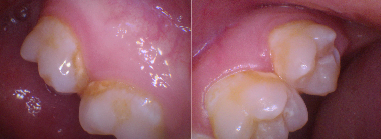
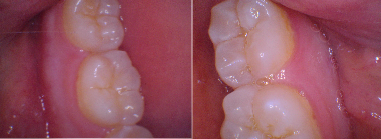
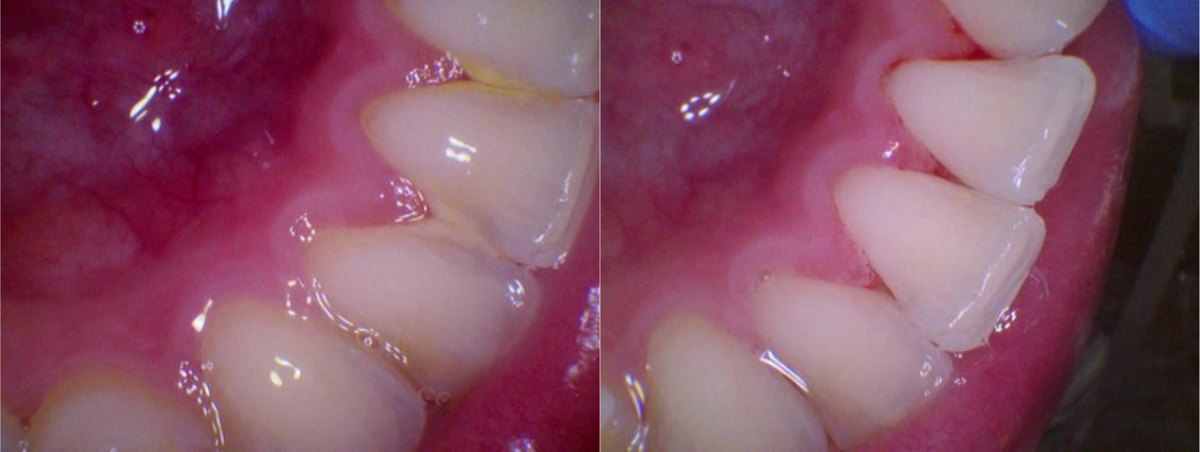
Which is also the honest caption for a before-and-after picture of a single clean. The redness and swelling go. Any bone and attachment already lost does not come back. Both things are true and they often appear in the same photograph.
Who does this work here
Much of it is done by our oral health therapists, Belinda and Suejin. Since July 2020 the Dental Board of Australia has not required oral health therapists to work under a structured professional relationship with a dentist, and periodontal treatment sits squarely in their scope. They are registered practitioners treating gum disease in their own right, with handover to a dentist or referral to a periodontist where a case calls for it.
We are open until 7pm on Tuesdays and Wednesdays, until 6pm on Mondays and Thursdays, from 8am on Fridays, and Saturday mornings, so periodontal appointments do not have to cost you a working day.
If your gums have never been charted, or it has been a while,
References
Australian Research Centre for Population Oral Health. Australia’s Oral Health: National Study of Adult Oral Health 2017-18. Adelaide: The University of Adelaide, 2019. adelaide.edu.au
Gaurilcikaite E, Renton T, Grant AD. The paradox of painless periodontal disease. Oral Diseases 2017; 23: 451-463. doi.org
Chapple ILC, Mealey BL, Van Dyke TE, et al. Periodontal health and gingival diseases and conditions on an intact and a reduced periodontium: consensus report of workgroup 1 of the 2017 World Workshop. Journal of Periodontology 2018; 89 (Suppl 1): S74-S84. doi.org
Suvan J, Leira Y, Moreno Sancho FM, Graziani F, Derks J, Tomasi C. Subgingival instrumentation for treatment of periodontitis: a systematic review. Journal of Clinical Periodontology 2020; 47 (Suppl 22): 155-175. doi.org
Sanz M, Herrera D, Kebschull M, et al. Treatment of stage I to III periodontitis: the EFP S3 level clinical practice guideline. Journal of Clinical Periodontology 2020; 47 (Suppl 22). doi.org
Leite FRM, Nascimento GG, Scheutz F, Lopez R. Effect of smoking on periodontitis: a systematic review and meta-regression. American Journal of Preventive Medicine 2018; 54: 831-841. doi.org
Simpson TC, Clarkson JE, Worthington HV, et al. Treatment of periodontitis for glycaemic control in people with diabetes mellitus. Cochrane Database of Systematic Reviews 2022; Issue 4: CD004714. doi.org
Sanz M, Marco del Castillo A, Jepsen S, et al. Periodontitis and cardiovascular diseases: consensus report. Journal of Clinical Periodontology 2020; 47: 268-288. doi.org
Frequently asked questions
If my gums do not bleed and nothing hurts, can I still have gum disease?
Yes. Pain is not a feature of it, and in one survey about a third of people with clinical disease reported never seeing bleeding. The measurements are what find it, which is why we chart rather than ask.
My dentist said my pockets are fine. Does that mean my gums are healthy?
Not on its own. More than half of Australian adults have lost attachment, while fewer than a third have a deep pocket, because recession hides the loss. Ask what your attachment loss is, not just your pocket depths.
Will the bone grow back after treatment?
Generally no. Treatment reduces pocket depth by around 1 to 1.5mm, mostly through inflammation settling and tissue reattaching. Regeneration is a specific surgical procedure for particular defect shapes, not a routine outcome.
Is gum disease going to cost me my teeth?
Usually not, if it is treated and maintained. In a cohort followed nearly seven years, 56 per cent of patients lost no teeth at all. The teeth most at risk are those with pockets of 6mm or more, marked mobility, or deep defects between molar roots.
Does treating my gums help my heart?
We cannot tell you that. The association is well established but no trial has shown that periodontal treatment prevents cardiovascular events, and the expert consensus says the evidence neither supports nor refutes it. What is clear is that the treatment is safe.
Why do I need to come every three months when my friend comes every six?
Because intervals should follow risk, not habit. The guideline range is three to twelve months. Bleeding under 10 per cent of sites suggests a longer interval is reasonable; above 30 per cent suggests a shorter one.
Can an oral health therapist treat gum disease, or do I need a dentist?
They can, in their own right. Periodontal treatment is within the scope of an oral health therapist, and since 2020 they have not needed to work under a dentist to provide it. Complex cases are handed over or referred.
Is one clean enough to fix gingivitis?
Often it settles the inflammation, yes, and that can be visible within a week or two. What a clean cannot do is restore bone or attachment already lost, so a dramatic improvement in appearance does not always mean the underlying support has changed.

About the authors
Dr Emily So and Dr Alice Shan are the principal dentists and co-owners of Oaks Dental in Neutral Bay. They are committed to providing thoughtful, evidence-based care that looks beyond treating individual teeth to support each patient’s overall oral health, function and wellbeing.
Disclaimer
All dental procedures involve potential risks and benefits. The information provided in this blog is general in nature and should not be taken as medical advice. We recommend that you seek guidance from a suitably qualified health professional before making decisions about your oral health. Where appropriate, you may also wish to consider obtaining a second opinion.
Any images or videos featured are shared with the informed consent of our patients and are intended for educational purposes only. They are not a guarantee of results, as every patient is unique. Treatment outcomes, including recovery, potential complications and effectiveness, can vary from person to person.
When were your gums last measured?
A full chart takes a few minutes, and it is the only way to know whether anything is moving.