
By Dr Alice Shan & Dr Emily So, Dentists
If you read our recent blog on toothbrush abrasion, you will already know that not all tooth wear comes from sugar or decay. Some of it comes from the way we brush. But there is another, equally common cause of enamel loss that many Australians do not realise is happening inside their own mouths every day. It is called dental erosion, and unlike abrasion, it is not a mechanical process. It is a chemical one.
Erosion happens when acid, from foods, drinks, or even the body’s own digestive system, dissolves the mineral structure of enamel. It does not require force or friction. It quietly softens and thins the protective outer layer of your teeth, often without any pain or warning signs in the early stages. By the time most people notice the symptoms, sensitivity, dullness, or yellowing, the damage is already well underway.
What Is Dental Erosion and How Is It Different From Abrasion?
Erosion and abrasion are often confused because they can look similar on the surface. Both lead to thinning enamel, sensitivity and changes in tooth appearance. The difference lies in the cause.
| Feature | Erosion | Abrasion |
| Process | Chemical, acid dissolves minerals | Mechanical, friction wears the surface |
| Common Source | Food, drinks, reflux, vomiting | Toothbrush, abrasive pastes, fingernails |
| Pattern | Smooth, scooped surfaces, often on biting edges | Wedge-shaped notches at the gumline |
| Onset | Develops with frequent acid exposure | Develops with repeated mechanical force |
Both processes can also occur together. A patient who frequently sips sports drinks and brushes hard immediately afterwards is dealing with two compounding forms of wear at once. That is why understanding the difference matters: the prevention strategies are not the same.
Which Foods and Drinks Are the Hidden Culprits?
Most people associate enamel damage with sugar and lollies. While sugar plays a role in decay, the bigger threat to enamel from a wear perspective is acid. Many of the foods and drinks we think of as healthy are highly acidic.
Common sources of dietary acid include:
- Soft drinks, including diet and sugar-free varieties
- Sports drinks and electrolyte beverages
- Fruit juices, especially citrus and apple
- Sparkling waters and flavoured mineral waters
- Wine, particularly white wine
- Citrus fruits such as lemons, oranges and grapefruit
- Vinegar-based dressings and pickled foods
- Apple cider vinegar shots
- Pre-mixed cocktails and pre-workout drinks
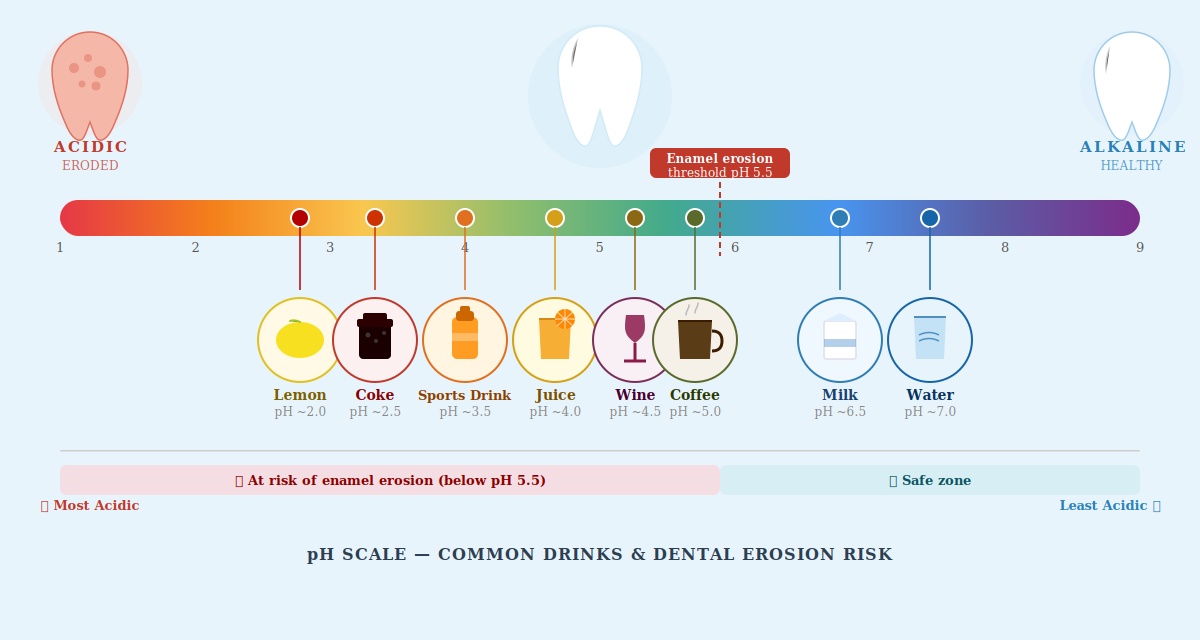
The pH scale gives a useful sense of how aggressive these are. Pure water sits at a neutral pH of 7. Enamel begins to demineralise below a pH of around 5.5. Many soft drinks sit between 2.5 and 3.5, which is roughly the same acidity as vinegar. Sipping a soft drink slowly across an afternoon exposes enamel to that environment for hours, not minutes.
How Does Lifestyle Influence Your Erosion Risk?
The way we consume acidic foods and drinks often matters more than the acid itself. A few patterns can quietly multiply the risk.
- Sipping rather than drinking. Slowly nursing a soft drink or sports drink keeps enamel bathed in acid for far longer than finishing the drink in one go.
- Swishing or holding liquids in the mouth. Tasting wine, holding juice while reading, or sucking on lemon slices all extend acid contact.
- Frequent snacking. Each acidic snack restarts the demineralisation window before saliva has fully neutralised the previous one.
- Reflux and morning sickness. Stomach acid is far stronger than dietary acid, and patients with gastric reflux or pregnancy-related nausea often experience accelerated erosion, especially on the inner surfaces of the upper teeth.
- Dry mouth. Saliva is the body’s natural buffer against acid. Medications, dehydration and certain health conditions reduce saliva flow and remove a key layer of protection.
What Can You Do to Neutralise Acid After Eating or Drinking?
The good news is that erosion is largely preventable, and small daily habits make a real difference. The aim is to reduce both the frequency of acid exposure and the duration of contact with enamel.
Practical strategies include:
- Rinsing your mouth with plain water immediately after consuming acidic foods or drinks
- Drinking acidic beverages with meals rather than between them, when saliva flow is naturally higher
- Using a straw for soft drinks, juices or sports drinks to limit contact with the teeth
- Finishing the drink in a reasonable timeframe rather than sipping over hours
- Chewing sugar-free gum after acidic exposures to stimulate saliva and speed up neutralisation
- Eating a small piece of cheese or drinking milk after acidic foods, as dairy helps buffer acid and provides minerals that support remineralisation
- Staying well hydrated to maintain healthy saliva flow
These habits do not require you to eliminate acidic foods or drinks from your routine. They simply give your teeth a chance to recover between exposures, which is exactly what enamel needs in order to remain strong.
Should You Brush Straight After Acidic Foods or Drinks?
This is one of the most common questions we hear, and the answer often surprises patients. Brushing immediately after consuming acid can actually worsen the damage.
When acid contacts enamel, it temporarily softens the surface. Brushing in this softened state, particularly with any pressure, can scrub away enamel that would otherwise have remineralised on its own. The combination of acid softening and mechanical brushing is one of the fastest ways to accelerate wear.
The recommendation is simple. After acidic foods or drinks:
- Rinse with plain water.
- Wait at least 30 minutes before brushing.
- Use a soft bristle toothbrush and a fluoride toothpaste to support remineralisation.
This small adjustment, waiting half an hour, can meaningfully extend the lifespan of your enamel.
How Can You Tell If You Already Have Signs of Erosion?
Erosion can be subtle in its early stages, but a few signs are worth watching for:
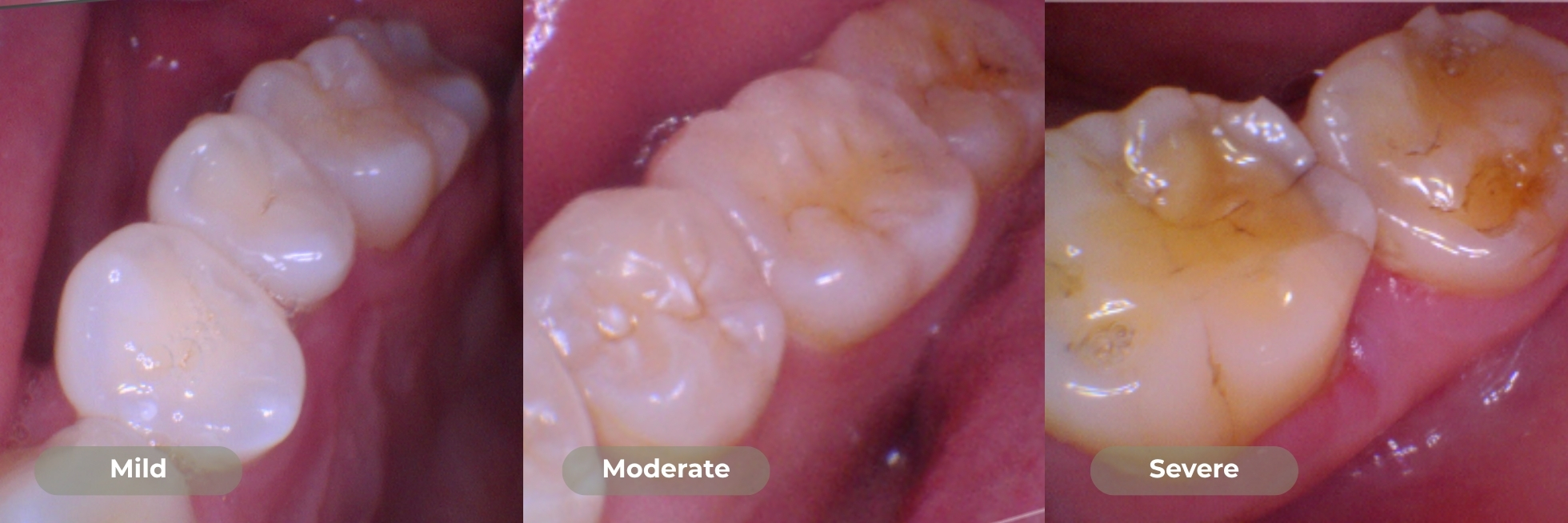
- Teeth appearing more yellow or translucent, particularly at the biting edges
- Smooth, rounded or cupped indentations on the chewing surfaces of molars
- Increased sensitivity to hot, cold or sweet foods
- Edges of front teeth becoming thinner, more transparent or chipping more easily
- A general loss of shine or a dull appearance to the teeth
If you notice any of these changes, it is worth raising them at your next appointment. Early-stage erosion can often be slowed or stabilised with dietary changes, fluoride applications and remineralising products. Advanced erosion may require restorative treatment to rebuild lost tooth structure.
Where Does Preventative Care Fit In?
At Oaks Dental, our approach to erosion mirrors our broader philosophy on oral health: prevention first, restoration only when necessary. During routine examinations, we look closely for the early signs of acid wear, often before patients notice anything themselves. We also take time to talk through your daily habits, not to lecture, but to understand where small changes might make the biggest difference.
Whether the issue is a daily soft drink habit, a sports drink routine that comes with your training schedule, or reflux that has been quietly affecting your teeth for years, the right plan starts with an honest conversation. From there, we can recommend targeted strategies, such as fluoride varnishes, remineralising toothpaste, dietary adjustments or referrals to your GP if a medical cause is suspected.
Around here it is often the sports drinks that come with weekend training at Primrose Park, or a sparkling water habit built up across a working week in the city. Erosion does not have to be inevitable. With awareness and a few sensible habits, most patients can protect their enamel for life. If you would like a personalised assessment of your erosion risk, we welcome you to book in for a check-up with our team.
References
Australian Dental Association, Oral Health Information for the Public https://www.ada.org.au
Australian Government Department of Health and Aged Care, Oral and Dental Health https://www.health.gov.au/topics/oral-and-dental-health
National Health and Medical Research Council, Public Health Guidance on Fluoride https://www.nhmrc.gov.au/health-advice/public-health/water-fluoridation
Frequently Asked Questions
Are sugar-free soft drinks safer for my teeth? Sugar-free does not mean acid-free. Most diet soft drinks are still highly acidic and can contribute to erosion in the same way as their sugary counterparts.
Can I still drink wine and sparkling water without damaging my teeth? Yes, but the way you consume them matters. Drinking with meals, rinsing with water afterwards and avoiding constant sipping all reduce the impact on enamel.
Does fluoride toothpaste help protect against erosion? Fluoride supports remineralisation and helps strengthen enamel against acid attack. It is a well-established part of daily protection.
Is reflux really a cause of erosion? Yes. Stomach acid is highly corrosive and can cause significant erosion, particularly on the inner surfaces of the upper teeth. If you suspect reflux is an issue, it is worth speaking to both your dentist and your GP.
What does early erosion treatment involve? Early management focuses on reducing acid exposure, supporting remineralisation with fluoride or specialised pastes, and monitoring the teeth over time. Restorative treatment is reserved for more advanced cases.